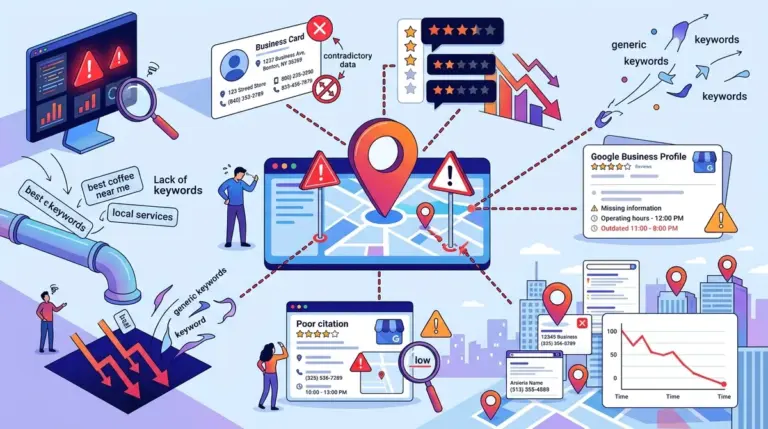
Local keyword research is the process of identifying the specific terms people use when looking for products or services within a defined geographic area. Unlike national SEO, where you compete for broad informational or commercial intent across a whole country, local SEO requires a granular focus on "near me" queries, city-specific modifiers, and neighborhood-level terminology. Success here determines whether a business appears in the Google Map Pack or the localized organic results below it.
Defining Your Core Service Seed List
The foundation of local keyword research is a list of your primary services or products. Start by listing exactly what you sell, then append geographic modifiers. For a plumbing company in Austin, the seed list isn't just "plumbing"; it includes "water heater repair," "clogged drain cleaning," and "emergency pipe repair."
Best for: Identifying the high-intent "money keywords" that drive direct leads.
Once you have the services, apply the three standard local modifiers:
- City-specific: [Service] + [City] (e.g., "HVAC repair Phoenix")
- Neighborhood-specific: [Service] + [Neighborhood] (e.g., "Coffee shop Brooklyn Heights")
- Implicit local: [Service] (e.g., "Dentist" searched by someone currently in Boston)
Extracting Data from Google Business Profile Insights
The most accurate data for local intent doesn't come from third-party tools; it comes from your existing Google Business Profile (GBP). The "Performance" tab in the GBP dashboard shows the exact queries users typed into Google before clicking on your listing or calling your business. This data is invaluable because it reflects real-world behavior in your specific zip code.
Analyze these queries for "surprise" keywords—terms you haven't optimized for but are already driving impressions. If you see a high volume of searches for "24-hour locksmith" but your landing page only mentions "locksmith services," you have identified a high-priority content gap that can be filled by updating your GMB description and service pages.
Warning: Do not over-optimize for "near me" keywords in your on-page copy. Google uses the searcher's GPS or IP location to determine proximity. Focus your written content on the city and neighborhood names; the "near me" relevance will follow naturally through your GBP location data.
Analyzing Local SERP Features and Intent
Not every keyword with a city name triggers a local result. Before committing to a keyword, you must manually check the Search Engine Results Page (SERP). If a search for "best pizza recipes in Chicago" returns national food blogs and no Map Pack, it is an informational query, not a local commercial one.
Look for these specific features to confirm local intent:
The Local Pack: A map with three business listings. If this appears, the keyword is a primary local target.
Local Service Ads (LSAs): The "Google Guaranteed" checkmarks at the top of the page. Their presence indicates high commercial value and heavy competition.
People Also Ask (PAA): These questions often reveal the specific concerns local customers have, such as "How much does a permit cost in [City]?" or "Who is the highest-rated contractor in [Neighborhood]?"
Mining Competitor Gaps with Localized Search
Your competitors are often the best source of keyword inspiration. However, looking at their site globally isn't enough. You need to see what they rank for in specific jurisdictions. Use a tool that allows you to set a specific zip code or city to view the "Local Organic" rankings.
Identify the "Category" your top three competitors have chosen for their Google Business Profile. If you are a "Personal Injury Lawyer" but your competitors are also ranking under "Trial Attorney" or "Legal Services," you may need to expand your keyword list to cover those secondary categories. This ensures you are appearing in as many relevant "discovery" searches as possible.
Leveraging Service Area Keywords for Mobile Users
Mobile search accounts for the majority of local queries. These users are often looking for immediate solutions. Keywords that include "open now," "emergency," "same day," or "delivery" are critical for service-based businesses. While these modifiers have lower monthly volume than the broad service name, the conversion rate is significantly higher because the user is at the bottom of the funnel.
For businesses that serve multiple suburbs, create individual "Service Area" pages. Instead of one page trying to rank for an entire metropolitan area, create dedicated pages for each suburb. For example, a landscaping company in Dallas should have separate pages for Plano, Frisco, and Arlington, each optimized with specific neighborhood landmarks or local climate mentions to signal hyper-relevance to Google.
Building a Local Keyword Map
Once you have your list, organize it into a keyword map. This prevents "keyword cannibalization," where multiple pages on your site compete for the same term. Assign one primary local keyword to each page. Your homepage should target the broadest "Service + City" term, while your individual service pages target "Specific Service + City."
Example Mapping:
Homepage: "Plumber in San Diego"
Service Page 1: "Water Heater Installation San Diego"
Service Page 2: "Emergency Drain Cleaning San Diego"
Blog Post: "Common Plumbing Issues in San Diego Older Homes"
Executing Your Local Strategy
To turn this research into revenue, update your meta titles, H1 tags, and image alt text with these localized terms. Ensure your Name, Address, and Phone Number (NAP) are consistent across the web, as this reinforces the geographic relevance of your keywords. Local keyword research is not a one-time task; as neighborhoods gentrify or service areas expand, your keyword list must evolve to reflect where your customers are and how they describe their needs. Ensuring your consistent name address and phone number across the web is also a key part of local SEO.
Local Keyword Research FAQ
Should I include my zip code in my keywords?
While users occasionally search by zip code, it is more common for them to search by city or neighborhood name. Use zip codes in your footer and contact page for technical SEO, but focus your primary content on the names of the areas you serve.
How do I find keywords for a business with no physical storefront?
Service-area businesses (SABs) should focus on "Service + City" keywords. Since you don't have a storefront for people to visit, your keyword strategy must lean heavily on the specific suburbs and regions where you provide mobile services.
Does keyword density matter for local SEO?
No. Overloading a page with "Plumber Chicago, Chicago Plumber, Best Chicago Plumbing" will likely result in a search penalty. Use the location naturally in the title, one heading, and within the body text. Google is sophisticated enough to understand the context without repetitive phrasing.
What is the best way to track local keyword progress?
Use a tool that provides "geo-grid" tracking. This shows you how your rankings change block-by-block across a city, rather than giving you a single average rank for the entire region. This reveals exactly where your local authority drops off.