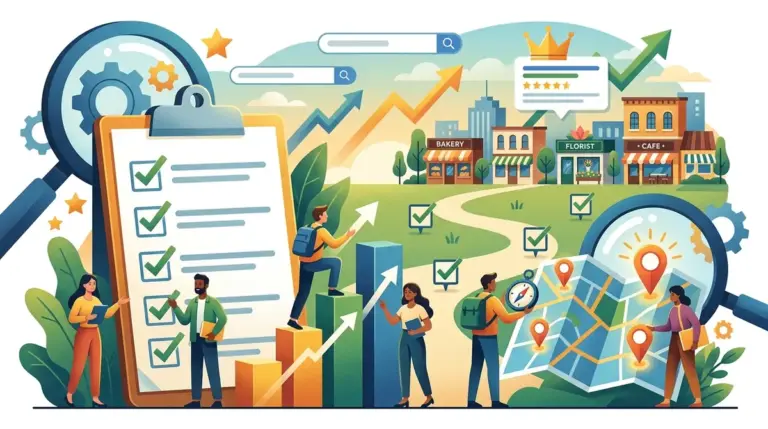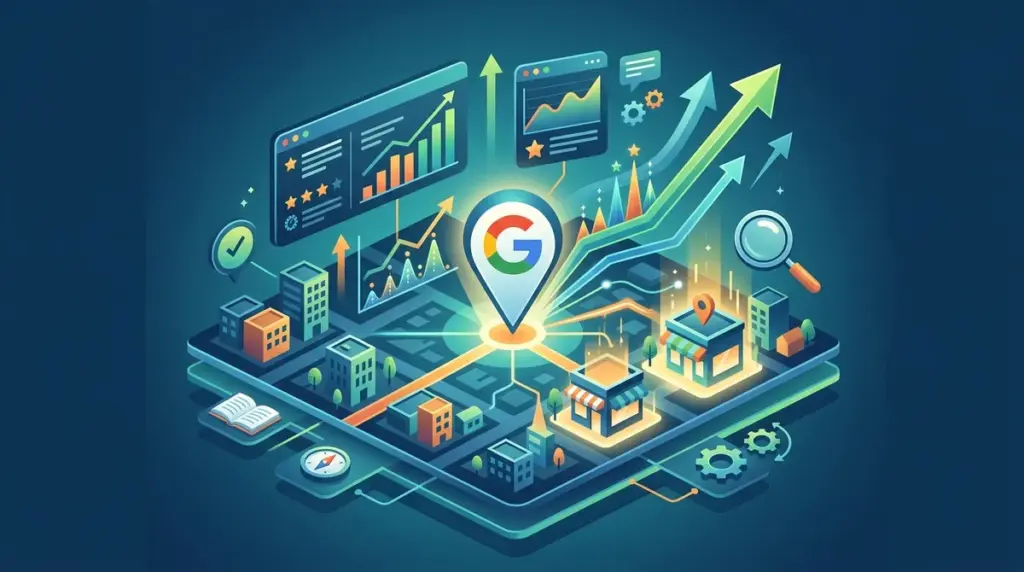
For a local business, visibility is often binary: you are either in the "Map Pack"—the top three local results appearing above standard organic links—or you are virtually invisible to mobile users. Google Business Profile (GBP) is the direct interface for Google’s local algorithm. It is not a social media profile or a passive directory listing; it is a structured data repository that feeds Google’s understanding of your entity's physical location, service area, and relevance to specific search queries. Optimizing this profile is the most direct way to influence the three pillars of local search: proximity, prominence, and relevance.
The Role of GBP in the Local Map Pack
When a user searches for "plumber near me" or "best coffee shop in Seattle," Google prioritizes the Map Pack. This feature captures roughly 44% of total clicks on local search results pages. Unlike traditional organic SEO, which relies heavily on backlinks and on-page content, local rankings are heavily weighted by the data contained within your GBP. Google uses this profile to verify that your business is a legitimate entity capable of serving the user's immediate geographic need.
Primary Function: GBP provides the "Where" and "What" to Google’s Knowledge Graph. Without a verified profile, your business cannot appear in Google Maps or the Map Pack, regardless of how well your website is optimized. It serves as the authoritative source for your Name, Address, and Phone number (NAP), which must be consistent across the web to build "trust" in the eyes of the algorithm.
Core Ranking Factors Influenced by GBP
Google’s local algorithm evaluates three specific criteria to determine which businesses earn a spot in the top three results. Your profile directly impacts each of these.
- Relevance: This is how well a local business profile matches what someone is searching for. Detailed business descriptions, correct category selection, and updated service lists help Google understand your business better.
- Distance: While you cannot change your physical location, a well-defined service area in GBP helps Google understand your reach for "service-area businesses" (SABs) that don't have a storefront.
- Prominence: This refers to how well-known a business is. This is calculated based on information Google has about a business from across the web, including links, articles, and directories, but GBP-specific signals like review count and score are heavily weighted here.
Primary and Secondary Category Selection
The "Primary Category" is arguably the most important field in your GBP. It carries more weight than any other piece of metadata. If you are a "Personal Injury Attorney," setting your primary category to "Lawyer" is too broad and will dilute your ranking potential for specific high-intent searches. You must choose the most specific primary category available and use secondary categories to capture related services. This tells the algorithm exactly which auctions your business should participate in.
The Impact of Review Velocity and Keywords
Reviews are not just social proof; they are a ranking signal. Google looks at three aspects of reviews: volume, rating, and velocity (how frequently you receive new reviews). Furthermore, the text within reviews provides "justifications." If a customer writes, "The best vegan pizza in Chicago," and a user searches for "vegan pizza," Google may highlight that review snippet in the Map Pack, directly linking the user's intent to your profile data.
Warning: Avoid the temptation to "burst" reviews by soliciting hundreds of entries in a single week after months of silence. This unnatural velocity can trigger spam filters, leading to review shadow-banning or profile suspension. Aim for a steady, consistent stream of feedback.
Optimizing GBP for Maximum Visibility
A "complete" profile is the baseline, but an "optimized" profile is what wins rankings. This involves utilizing every available field to feed Google's machine-learning models more context about your operations.
Best for: Businesses in competitive metros where proximity alone isn't enough to secure a top-three spot.
To move the needle, focus on these specific areas:
- High-Resolution Imagery: Profiles with interior, exterior, and team photos receive 35% more clicks to their websites. Google uses AI (Cloud Vision API) to "read" your photos. Uploading a photo of a pizza oven helps confirm you are a pizzeria.
- Google Posts: These function like mini-ads or social updates. While their direct impact on rankings is debated, they significantly increase engagement (clicks and calls). High engagement signals to Google that your profile is active and relevant, which indirectly boosts prominence.
- Q&A Section: You can—and should—pre-populate your own Q&A section. Use this to address common barriers to entry, incorporating long-tail keywords naturally into the answers.
The Influence of User Engagement Signals
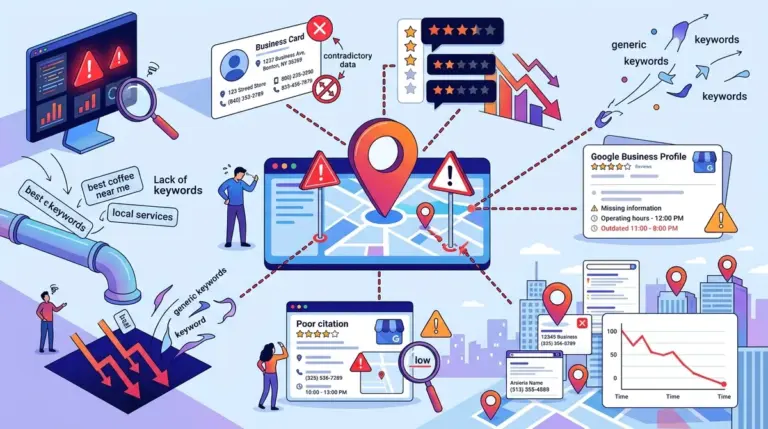
Google tracks how users interact with your profile. If a user clicks "Call," "Request a Quote," or "Directions," these are positive signals. If a user clicks your profile and then immediately returns to the search results to click a competitor (pogo-sticking), it tells Google your profile didn't satisfy the intent. This is why keeping your hours accurate—especially during holidays—is a ranking factor. A user who drives to a "closed" business despite the profile saying "open" is likely to leave a negative review or report the data as inaccurate, both of which damage your local standing. Avoiding common local search mistakes is crucial for maintaining a strong online presence.
Establishing an Actionable Local Strategy
To leverage Google Business Profile for better rankings, you must treat it as a dynamic asset rather than a "set it and forget it" directory listing. Start by auditing your primary category against the top three competitors in your city. If they are using a more specific category, switch yours immediately. Next, implement a system for gathering reviews that focuses on consistency rather than volume. Finally, ensure your website’s local landing pages (e.g., your "Contact" or "Locations" page) contain the exact same NAP data as your GBP. This cross-verification solidifies your entity's authority in the local ecosystem. Following local seo best practices can significantly improve your business visibility.
Local SEO Frequently Asked Questions
Does my business address need to be visible to rank?
No. Service-area businesses (like plumbers or cleaners) can hide their address and define a service area by city or zip code. However, you must have a physical location that Google can verify via mail or video to be eligible for a profile.
Can I use keywords in my business name to rank higher?
While adding keywords to your business name (e.g., "Joe’s Plumbing - Best Plumber in Denver") often provides a temporary ranking boost, it is a violation of Google’s Terms of Service unless that is your legal registered business name. This carries a high risk of permanent profile suspension.
How often should I update my Google Business Profile?
You should aim for at least one update per week. This could be a new photo, a Google Post about a current offer, or responding to new reviews. Regular activity signals to Google that the business is operational and the information is likely accurate.