Local SEO is the difference between a storefront that captures neighborhood foot traffic and one that remains invisible to the 46% of all Google searches that have local intent. Unlike traditional SEO, which focuses on global or national visibility, local search optimization prioritizes proximity, relevance, and prominence within a specific geographic radius. For a small business or a multi-location agency, mastering these fundamentals is the most direct path to increasing physical store visits and localized service inquiries.
The Google Business Profile as Your Digital Storefront
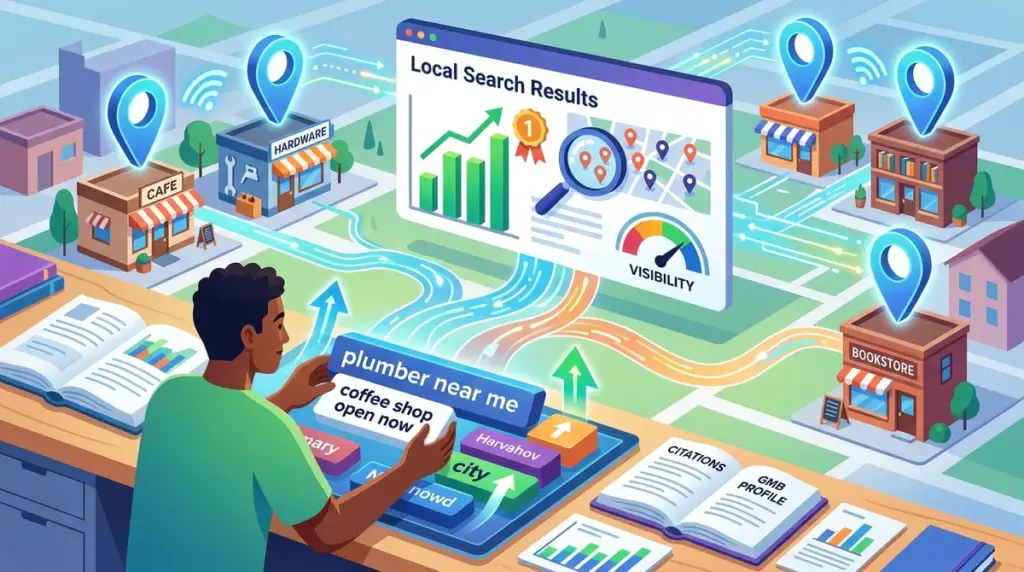
A Google Business Profile (GBP) is the cornerstone of local search. It is the data source for the "Map Pack"—the three-listing block that appears at the top of search results for queries like "plumber near me" or "best coffee in Chicago." Without a verified and optimized GBP, a business is effectively locked out of the most valuable real estate on the search engine results page (SERP).
Best for: Brick-and-mortar retailers and service-area businesses (SABs) like contractors or cleaners who meet clients at their locations.
To optimize a profile, you must select the correct primary category. Google uses this as the primary signal for what your business actually does. If you are a "Family Law Attorney," do not simply select "Lawyer." The more specific the category, the less direct competition you face in the Map Pack. Secondary categories should be used to capture tangential services, but they must be supported by the content on your website to maintain topical authority.
Warning: Never create multiple listings for the same physical location to "corner the market." Google’s algorithm is aggressive in identifying duplicate entries, and a suspension of your primary profile can take weeks or months to resolve, stripping your business of its local visibility overnight.
NAP Consistency and the Role of Citations
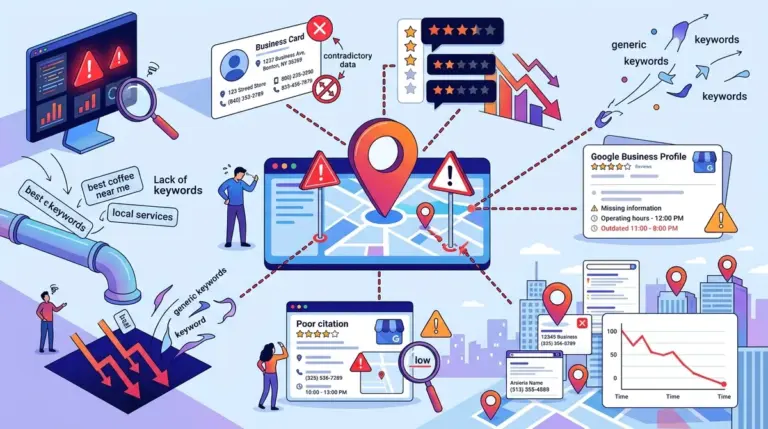
NAP stands for Name, Address, and Phone number. In the eyes of a search engine, consistency across the web is a proxy for trustworthiness. If your Yelp profile lists your address as "123 Main St." but your website says "123 Main Street, Suite 200," search engines may struggle to verify that these entities are the same, leading to a drop in local rankings.
Citations are mentions of your NAP on third-party websites, directories, and social platforms. While the "weight" of citations has shifted over the years, they remain a foundational trust signal. You should prioritize the "Big Three" data aggregators—Data Axle, Neustar Localeze, and Foursquare—which push your business data to hundreds of smaller directories. Following this, focus on industry-specific directories (like Avvo for lawyers or TripAdvisor for hospitality) which provide high-relevance backlinks alongside the NAP data.
Local Keyword Research Strategy
Local keyword research requires a shift in perspective. Instead of chasing high-volume national terms, you are looking for "Service + City" or "Service + Neighborhood" combinations. A bakery in Brooklyn shouldn't just target "sourdough bread"; they need to target "sourdough bread Brooklyn" or "best bakery in Williamsburg."
Use tools to identify how users in specific zip codes are phrasing their queries. Often, local intent is signaled by "near me" triggers. While you cannot realistically optimize a page for the phrase "near me" (as Google calculates this based on the user's GPS or IP location), you can optimize for the landmarks and neighborhoods that define that "near me" radius. Including mentions of local transit stops, parks, or well-known intersections in your copy helps Google associate your business with a specific micro-region.
On-Page Optimization for Local Intent
Your website must act as a reinforcement of your Google Business Profile. Each location you serve should have its own dedicated landing page. Avoid "doorway pages" that contain thin, repetitive content with only the city name changed. Instead, each location page should include:
- An embedded Google Map showing your exact location.
- Specific driving directions from major local landmarks.
- Location-specific testimonials and reviews.
- Hyper-local content, such as community involvement or local news relevant to your service.
- LocalBusiness Schema Markup (JSON-LD) to provide search engines with structured data about your hours, price range, and coordinates.
Schema markup is particularly critical. It allows you to explicitly tell search engines your operating hours, including holiday exceptions. This reduces the friction for the customer and ensures that Google doesn't display your business as "Closed" when you are actually open, a common point of failure for unoptimized local sites.
Managing Reviews and Social Proof
Review signals—including review quantity, velocity, and diversity—are a top ranking factor for the Map Pack. Google prioritizes businesses that show active, recent engagement from real users. However, it is not just about the star rating. The text within the reviews matters. When customers use keywords related to your services (e.g., "the best HVAC repair in Phoenix"), it strengthens the association between your business and that search term.
Responding to every review, both positive and negative, is a non-negotiable task. A professional response to a negative review can often mitigate the damage to your reputation and shows search engines that the business is managed by an active, responsive owner. Avoid canned, repetitive responses; Google’s systems are sophisticated enough to recognize automated patterns, which can diminish the perceived authenticity of your profile.
Building Local Authority Through Backlinks
In local SEO, a link from a local little league team's website or a neighborhood blog can often be more valuable than a link from a high-authority national publication. This is because local links provide "geographical relevance."
Best for: Building long-term "prominence" in a specific city or region.
Focus on local sponsorships, memberships in the local Chamber of Commerce, or partnerships with adjacent businesses. If you are a wedding photographer, a link from a local florist or venue carries significant weight because it signals to Google that you are an integrated part of the local business ecosystem. These links are harder for competitors to replicate than standard directory listings, providing a sustainable competitive advantage.
Immediate Steps for Local Growth
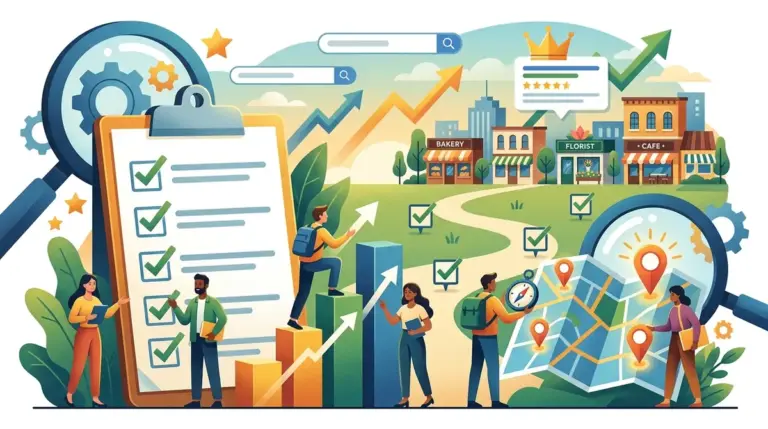
To move from invisible to competitive, execute these steps in order. First, claim and verify your Google Business Profile, ensuring your primary category is as specific as possible. Second, perform a NAP audit to ensure your name, address, and phone number are identical across your website, Facebook, and Yelp. Third, implement LocalBusiness Schema on your contact or location pages to give search engines structured data to crawl. Finally, establish a system for requesting reviews from every satisfied customer immediately after their transaction, as recency is a key component of the prominence algorithm.
Local SEO FAQ
Do I need a physical office to rank in local SEO?
No. If you serve customers at their locations (like a plumber or landscaper), you can register as a "Service Area Business" in your Google Business Profile. You will provide your home address for verification, but you can choose to hide it from the public listing, showing only the regions you serve.
How long does it take to see results from Local SEO?
While technical changes like Schema markup can be indexed in days, ranking in the Map Pack typically takes three to six months of consistent effort. This timeline depends on the competitiveness of your industry and the current strength of your local citations and reviews.
Are paid ads necessary for Local SEO?
Paid ads (Local Services Ads or Google Ads with location extensions) can provide immediate visibility at the top of the SERP, but they do not directly improve your organic local rankings. They are a useful supplement while you wait for your organic local SEO efforts to gain traction.
Why is my business not showing up in the Map Pack even though I'm nearby?
Proximity is only one factor. If your competitors have significantly more reviews, better-optimized profiles, or stronger local backlink profiles, Google may rank them higher even if they are further away from the searcher. You must balance proximity with relevance and prominence.