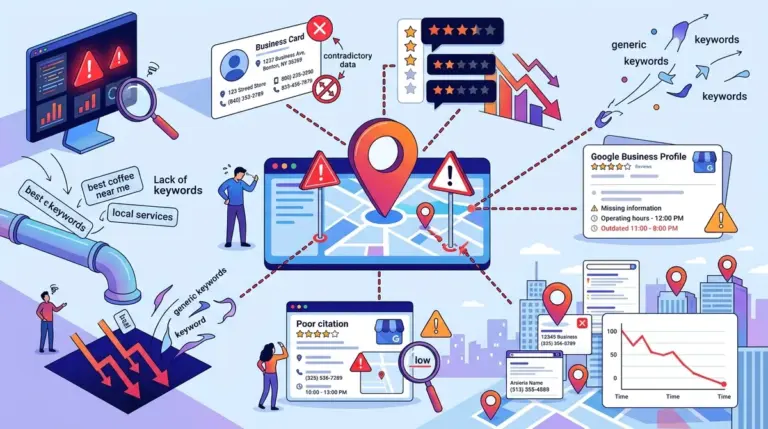
Local SEO is the practice of optimizing a website and its digital presence to increase visibility in location-based search results. While traditional SEO focuses on ranking for broad terms on a national or global scale, local SEO targets users searching for products or services within a specific geographic radius. When a user searches for "emergency plumber" or "legal consultants in Boston," search engines prioritize results that demonstrate proximity, relevance, and local prominence.
For businesses with a physical storefront or a defined service area, local SEO is the primary driver of high-intent traffic. Unlike general informational queries, local searches often signal immediate transactional intent. According to Google, a significant percentage of mobile searches with local intent lead to a store visit or a phone call within 24 hours. Failure to optimize for these queries means ceding the most valuable real estate on the Search Engine Results Page (SERP) to competitors who have claimed their local digital footprint.
The Mechanics of the Local Map Pack
The most visible element of local search is the Local Pack, often referred to as the "Map Pack" or "3-Pack." This is the box that appears at the top of Google’s results, featuring a map and three specific business listings. These listings are pulled directly from Google Business Profile (GBP) data, not necessarily from the organic web index. Ranking here requires a different set of signals than ranking in the standard blue links below it.
Google determines these rankings based on three primary factors:
- Proximity: How close the business is to the searcher or the specified location in the query.
- Relevance: How well the business’s categories and content match the user’s specific search term.
- Prominence: The business's authority based on information Google has from across the web, including reviews, links, and citations.
Best for: Brick-and-mortar retailers, medical practices, law firms, and home service providers (HVAC, plumbing, landscaping) who rely on customers within a 15-to-50-mile radius.
Optimizing the Google Business Profile Core
A Google Business Profile is the foundational asset of any local SEO strategy. It is a free listing that allows businesses to manage how they appear on Google Maps and Search. Optimization starts with choosing the correct primary category. If a business selects "Restaurant" when "Italian Restaurant" is more accurate, they lose relevance for specific queries. Secondary categories should be used to capture niche services, such as "Catering" or "Pizza Delivery."
Accuracy in the NAP data—Name, Address, and Phone number—is non-negotiable. Search engines use this data to verify that a business is a legitimate entity. Discrepancies, such as using "St." in one profile and "Street" in another, or having an old phone number on a legacy directory, can dilute trust signals. High-resolution photos of the interior, exterior, and products also contribute to higher click-through rates, which indirectly signals prominence to Google.
Pro Tip: Do not keyword-stuff your business name in your Google Business Profile. While adding keywords like "Best Chicago Plumber" to a business named "Smith & Sons" might provide a temporary ranking boost, it is a violation of Google’s Terms of Service and frequently leads to profile suspension or permanent removal from the Map Pack.
The Role of Local Citations and NAP Consistency
A citation is any mention of your business’s NAP information on the web. These typically appear on business directories like Yelp, Yellow Pages, TripAdvisor, or industry-specific sites like FindLaw or Angi. While the direct "link juice" from these sites is often minimal, their value lies in verification. When Google finds the exact same business information across fifty authoritative directories, it confirms the business's location and legitimacy.
Local SEO audits often begin with identifying "dirty data"—outdated addresses or duplicate listings. Managing these citations manually is time-consuming but necessary for businesses that have moved locations or changed phone numbers. Structured citations (on directories) and unstructured citations (mentions in local news articles or blogs) both contribute to the prominence factor of the local algorithm.
Localized Content and On-Page Optimization
On-page SEO for local intent involves more than just adding a city name to a title tag. To rank in the organic results below the Map Pack, a site must demonstrate local expertise. This is achieved through dedicated location pages, especially for businesses with multiple branches. Each location page should feature unique content, including local staff bios, specific service descriptions, embedded Google Maps, and localized customer testimonials.
Technical elements also play a role. Implementing LocalBusiness Schema markup—a type of structured data code—helps search engines understand the specific details of a business, such as opening hours, price ranges, and accepted payment methods. This data is often pulled into "Rich Snippets," making the search result more interactive and informative for the user.
Reviews as a Ranking and Conversion Signal
Reviews are a dual-purpose asset: they act as a ranking signal for the Map Pack and a conversion tool for potential customers. Google looks at review quantity, the average star rating, and the "velocity" of reviews—how frequently new ones are posted. A business with 500 reviews from three years ago may be outranked by a business with 50 reviews posted in the last month.
Responding to reviews is equally critical. It demonstrates to both the customer and the search engine that the business is active and engaged. Including keywords naturally in review responses (e.g., "We are glad you enjoyed the vegan pizza at our downtown Austin location") can marginally assist in relevance, though the primary benefit remains user trust and engagement metrics.
Executing a Local SEO Audit
To move from theory to implementation, businesses should follow a systematic approach to identifying gaps in their local presence. This process ensures that technical errors aren't undermining content efforts.
A standard local audit includes checking for:
- Duplicate Google Business Profiles that may be splitting review equity.
- Missing LocalBusiness Schema on the contact and location pages.
- Slow mobile load times, as most local searches occur on mobile devices.
- Inconsistent NAP data across the top 20 business directories.
- Lack of localized backlinks from local chambers of commerce or community blogs.
Frequently Asked Questions
How long does it take to see results from local SEO?
Unlike paid advertising, local SEO is a long-term play. While technical fixes and GBP claiming can show movement in 30 days, significant movement in the Map Pack for competitive terms typically takes three to six months of consistent citation building and review acquisition.
Do I need a physical office to do local SEO?
No. Businesses that travel to customers (like locksmiths or cleaners) can create a "Service Area Business" profile on Google. You must provide a physical address for verification, but you can hide it from the public and instead define the geographic areas you serve.
Are backlinks still important for local search?
Yes. Backlinks from local sources—such as a local newspaper, a neighborhood blog, or a local charity you sponsor—carry significant weight. They prove to Google that your business is an integrated part of the local community, which boosts your prominence score.
Does my website traffic affect my Map Pack ranking?
There is a correlation. High-quality organic traffic to your website signals to Google that your business is an authority. If your website ranks well in local organic results, it often provides a lift to your Google Business Profile visibility in the Map Pack.