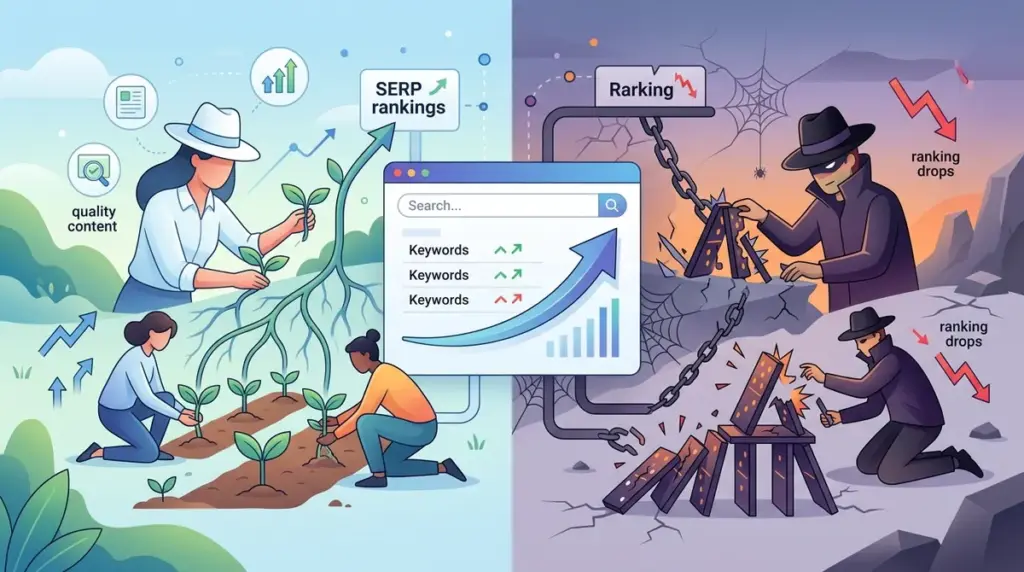
Link building determines whether a domain becomes a compounding financial asset or a liability waiting for a manual action. In the SEO industry, the distinction between white hat and black hat tactics isn't just a matter of ethics; it is a calculation of risk tolerance, resource allocation, and long-term business viability. Choosing a path requires understanding how Google’s SpamBrain AI and manual review teams identify manipulation versus genuine editorial endorsement. Understanding this fundamental concept is key to grasping the nuances of what link building actually entails.
The Mechanics of White Hat Link Building
White hat link building focuses on "earning" links through relevance and utility. The goal is to create a digital footprint that Google views as a natural byproduct of a high-quality website. These links are typically harder to acquire, requiring significant time and creative energy, but they carry the highest authority and are immune to most algorithmic updates.
Best for: Long-term brand building, enterprise sites, and businesses that cannot afford to have their primary domain deindexed.
Editorial Outreach and Digital PR
The core of white hat SEO is providing value to journalists and bloggers. This involves identifying gaps in existing content and offering a superior resource. Common tactics include:
- Data-Driven Studies: Conducting original research or surveys that journalists can cite as a primary source.
- Resource Page Link Building: Finding curated lists of helpful tools or guides and pitching your content as a necessary addition.
- Expert Commentary: Using platforms like Connectively or Featured to provide quotes for news articles, resulting in high-authority "earned" links.
- The Skyscraper Technique: Improving upon the best-performing content for a specific keyword and reaching out to those who linked to the original, inferior version.
Pro Tip: A link is truly "white hat" if it provides value to the user clicking it. If the link exists solely for a crawler and would be ignored or resented by a human reader, it likely falls into a higher-risk category.
The Architecture of Black Hat Link Building
Black hat link building prioritizes speed and scale over quality and sustainability. These methods aim to exploit weaknesses in the search algorithm by creating artificial signals of authority. While these tactics can produce rapid ranking increases, they are often short-lived. Google’s primary defense against these tactics is the Penguin algorithm (now part of the core algorithm) and manual spam actions.
Best for: "Burn-and-turn" niche sites, testing environments, or high-competition industries where the cost of losing a domain is factored into the business model.
Private Blog Networks (PBNs)
A PBN is a cluster of websites owned by a single entity, used primarily to link out to a target site. These domains are often expired sites that still hold significant authority. The risk lies in the "footprint"—shared hosting, similar themes, identical WHOIS data, or interlinking patterns that allow Google to identify and devalue the entire network simultaneously.
Automated Spam and Link Farms
This involve using software to blast links across comment sections, forums, and low-quality directories. Link farms are sites created for the sole purpose of selling links. These are easily detectable because they lack a cohesive topical focus and link out to disparate niches like gambling, pharmaceuticals, and legal services from the same page.
The Grey Hat Reality of Modern SEO
The line between white and black hat is often blurred by "Grey Hat" tactics. This usually involves outreach that follows white hat principles but includes a commercial transaction. For example, a guest post on a reputable site that requires a "processing fee" technically violates Google’s Webmaster Guidelines regarding paid links, yet the resulting link often looks indistinguishable from a natural editorial link.
Assessing the Risk of Paid Placements
If you choose to engage in paid link building, the risk is mitigated by the quality of the host site. A site that sells links to anyone will eventually be flagged. A site that maintains strict editorial standards and only accepts relevant, high-quality content—even if a fee is involved—is less likely to trigger a penalty. However, the lack of a rel="sponsored" or rel="nofollow" tag remains a technical violation.
Quantifying the Impact of a Penalty
The primary differentiator between these two schools of thought is the cost of recovery. A white hat site may grow slowly, but its traffic is stable. A black hat site faces two types of suppression:
Algorithmic Devaluation: Google simply stops counting the links. Your rankings drop because the "fuel" for your SEO has been neutralized. No notification is given; the site simply fades from the SERPs.
Manual Action: A human reviewer flags your site for "unnatural outbound links" or "unnatural links to your site." This results in a notification in Google Search Console and can lead to the entire domain being removed from the index. Recovery requires a "disavow" file and a reconsideration request, a process that can take months and rarely restores the site to its former peak.
Transitioning to a Sustainable Link Strategy
To move away from high-risk tactics, focus on building a "linkable asset." This is a piece of content so useful that it would be an editorial oversight for a relevant site not to link to it. Instead of buying 50 low-quality PBN links, spend that budget on a single high-quality infographic, a proprietary calculator, or a comprehensive industry report. This shift moves your SEO from a recurring expense to a long-term investment in brand equity.
Audit Your Current Backlink Profile
Use an SEO tool to categorize your links. Look for "toxic" markers: high percentages of exact-match anchor text, links from sites with zero organic traffic, and links from non-relevant foreign language domains. If your profile is heavily weighted toward these, begin a proactive white hat campaign to dilute the risk profile with high-authority, branded links.
Frequently Asked Questions
Is guest posting considered white hat or black hat?
It depends on the execution. Guest posting for the sake of sharing expertise on a relevant site is white hat. Scaling guest posts using low-quality, spun content on "contributor" sites that exist only to sell links is black hat.
Can I be penalized for links I didn't build?
This is known as "Negative SEO." While rare, competitors may blast your site with spam links. Google generally ignores these, but if you see a massive influx of toxic links, using the Disavow Tool is a standard precautionary measure.
How long does it take for white hat links to impact rankings?
White hat links often take longer to be crawled and indexed because they are placed on high-traffic, legitimate sites rather than "pinged" spam networks. Expect to see movement within 3 to 6 months as the authority of the earned links compounds.
Are Niche Edits (Link Insertions) safe?
Niche edits involve adding a link to an existing, indexed article. If the link is relevant and the site is a genuine business or blog, it is relatively safe. If the link is inserted into a hacked site or a PBN, it carries high risk.