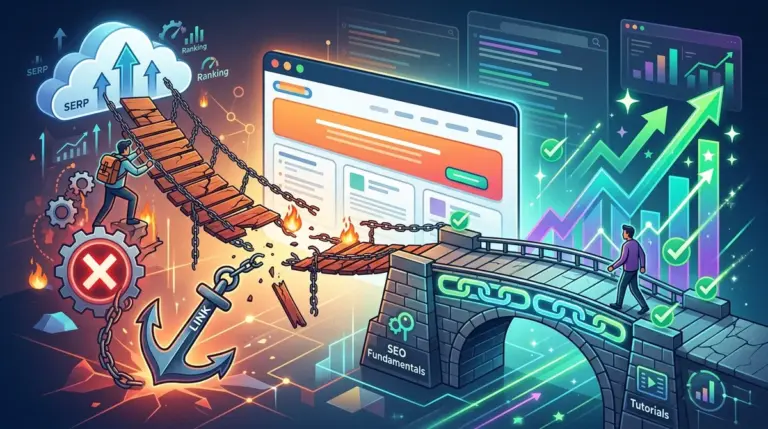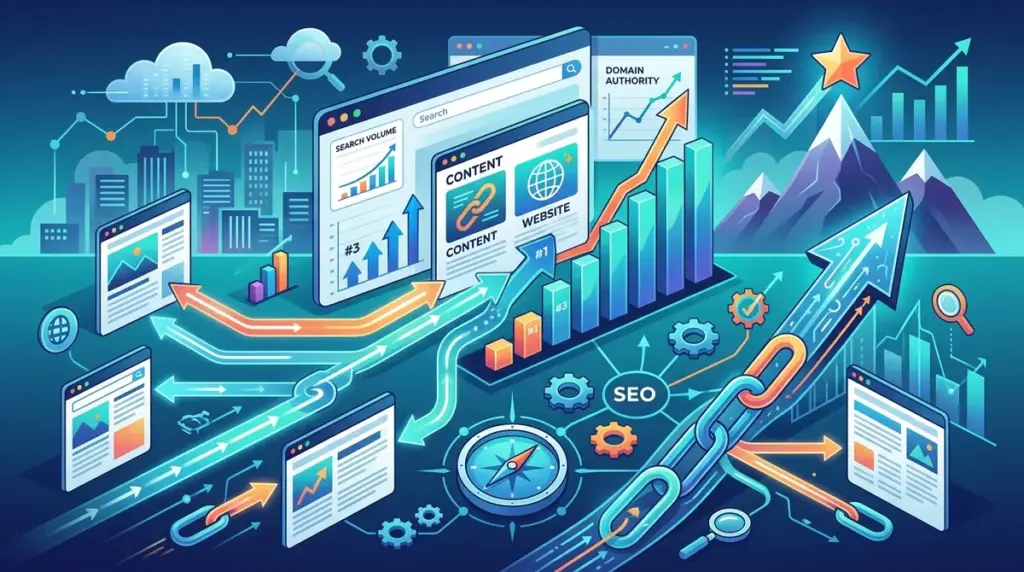
Link building is the strategic process of acquiring hyperlinks from third-party websites to your own. In the hierarchy of search engine optimization, if technical SEO is the foundation and content is the structure, link building is the electricity that powers visibility. Search engines like Google treat these links as votes of confidence. When a reputable site links to your page, it signals to crawlers that your content is authoritative, relevant, and trustworthy enough to be recommended to users. Understanding the difference between white hat vs black hat strategies can guide your approach to ethical link acquisition.
For a business, link building is rarely about the raw quantity of connections. It is a competitive necessity. In high-competition niches, even the most optimized content will struggle to reach the first page of search results without a robust backlink profile. The goal is to build "link equity"—a measurable transfer of authority that improves your domain’s ability to rank for difficult keywords.
The Core Mechanics of Link Equity
To understand why link building works, you must understand PageRank. Developed by Google’s founders, this algorithm calculates the importance of a webpage based on the number and quality of links pointing to it. While Google’s algorithm has evolved to include hundreds of other signals, the fundamental concept remains: a link is a transfer of "juice" or authority.
Best for: Improving Domain Rating (DR) or Domain Authority (DA) and increasing the crawl frequency of new pages.
When a high-authority site in the financial sector links to a fintech startup, it passes more value than a link from a generic hobbyist blog. This is because search engines weigh the source's own authority and its topical relevance to the destination. A link from an irrelevant source provides diminishing returns and, in some cases, can trigger spam filters if the pattern appears unnatural.
Anatomy of a High-Value Backlink
Not all links are created equal. A single link from a major national news outlet or a primary industry resource can often outweigh hundreds of links from low-traffic directories. To evaluate the potential impact of a link, editors look at four specific criteria:
Topical Relevance
Relevance is the most significant factor in modern link building. If you run a commercial real estate firm, a link from an architecture magazine or a local chamber of commerce carries significant weight. Search engines use the context of the linking page to categorize your own site. If your links come from unrelated niches, the "thematic signal" becomes diluted, making it harder for Google to trust your expertise in your specific field. Avoiding common link building mistakes early on will help prevent penalties and ensure your efforts are effective.
Link Placement and Context
A link buried in a footer or a sidebar (site-wide links) is worth significantly less than a "contextual link" placed within the body text of an article. Editorial links—those placed by a human editor because your content adds value to their story—are the gold standard. They suggest that the link exists for the user's benefit, rather than for SEO manipulation.
Anchor Text Distribution
Anchor text is the clickable word or phrase that hides the URL. While it is tempting to want every anchor to be your primary keyword (e.g., "best CRM software"), this looks suspicious to search engines. A natural link profile includes a mix of branded anchors (your company name), naked URLs (SEO Learning Center), and generic phrases (click here, read more). Over-optimization of anchor text is a frequent cause of manual penalties.
The Follow vs. Nofollow Attribute
By default, links are "dofollow," meaning they pass authority. However, some sites use the rel="nofollow" attribute, which tells search engines not to pass link equity. While nofollow links (common on social media and in comment sections) do not directly boost rankings, they are still valuable for driving referral traffic and creating a natural-looking profile.
Warning: Avoid "bulk" link-building packages that promise hundreds of links for a low flat fee. These typically rely on Private Blog Networks (PBNs) or automated spam. Google’s spam detection systems are highly effective at identifying these patterns, and the resulting "Link Spam" penalty can take months or years to recover from.
Proven Strategies for Link Acquisition
Effective link building requires a shift from "building" to "earning." It is a combination of content marketing and digital PR. Here are the primary methods used by professional SEO agencies:
- Digital PR and Data Journalism: Creating original research, surveys, or data visualizations that journalists want to cite as a source. This is the most effective way to earn high-authority links from news organizations.
- Resource Page Link Building: Identifying "Helpful Resources" pages within your industry and pitching your guide or tool as a valuable addition to their list.
- Broken Link Building: Finding 404 errors on competitor sites or industry blogs, then reaching out to the webmaster to suggest your live, high-quality content as a replacement for the dead link.
- Skyscraper Technique: Finding a piece of content that has already earned many links, creating something significantly better (more up-to-date, better designed, or more detailed), and reaching out to the original linkers to show them the improved version.
- Guest Posting (Strategic): Contributing expert articles to reputable industry publications. This should be done sparingly and only on sites with actual readership and strict editorial standards.
Executing a Sustainable Link Acquisition Roadmap
To start, perform a gap analysis. Use a backlink tool to see which domains are linking to your top three competitors but not to you. This provides a "hit list" of sites that are already predisposed to linking to content in your niche. Next, audit your existing assets. Do you have a proprietary calculator, a deep-dive whitepaper, or a unique set of industry statistics? These are your "linkable assets."
Once you have your assets and your targets, the process becomes one of consistent outreach. Personalize every email. Explain exactly why your resource benefits their specific audience. Link building is a long-term play; typically, it takes 3 to 12 months to see the full impact of a successful campaign on your organic rankings. Focus on steady, month-over-month growth rather than sudden spikes, which can look inorganic to search algorithms.
Backlink Fundamentals FAQ
How many links do I need to rank on page one?
There is no fixed number. It depends entirely on the "link debt" between you and the current top-ranking pages. If the top results have 50 high-authority links each, you will likely need a similar volume and quality to compete. Use SEO tools to calculate the average number of referring domains for your target keyword.
Does getting links from the same site multiple times help?
The first link from a domain provides the most significant boost in authority. While subsequent links from the same site are good for referral traffic and brand reinforcement, they offer diminishing returns in terms of PageRank. A diverse profile of 100 links from 100 different domains is much stronger than 1,000 links from a single domain.
Is it illegal or against the rules to buy links?
It is not illegal, but it is a direct violation of Google’s Search Essentials (formerly Webmaster Guidelines). If Google detects that you have paid for links that pass PageRank, they may devalue those links or penalize your entire site. If you must pay for a placement (such as a sponsored post), it should be marked with rel="sponsored".
How long does it take for a new link to affect my rankings?
Search engines must first crawl the page where the link is located. This can take anywhere from a few days to several weeks. Once crawled, the link equity is factored into the index, and you may see incremental movements in your keyword positions over the following month.