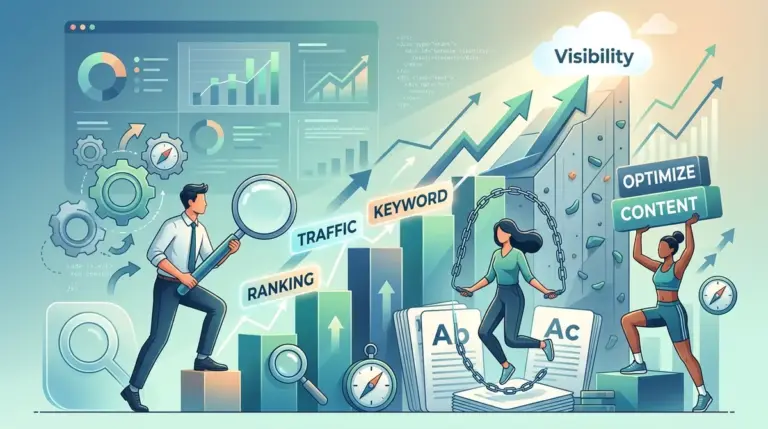
Generic SEO certifications often fail because they prioritize broad theory over the specific technical and creative skills required to move needle-metrics in a specific niche. A local service business requires a vastly different optimization strategy than a global SaaS platform or a high-volume affiliate site. Building your own SEO learning plan allows you to bypass redundant introductory material and focus on the high-impact gaps in your current expertise. This approach transforms SEO from a nebulous set of "best practices" into a repeatable, data-driven workflow tailored to your specific commercial environment. This approach transforms SEO from a nebulous set of "best practices" into a repeatable, data-driven workflow tailored to your specific com, making a structured learning plan invaluable.
Auditing Your Current SEO Knowledge Gap
Before sourcing tutorials or reading documentation, you must identify where your "T-shaped" skill set is lacking. Most SEO professionals fall into one of three buckets: the technical architect, the content strategist, or the digital PR specialist. To build a balanced plan, you need to assess your proficiency across the four foundational pillars of the discipline.
The Four Pillars Assessment
- Technical SEO: Can you identify crawl budget issues, manage XML sitemaps, and optimize Core Web Vitals without relying solely on automated plugin recommendations?
- On-Page Optimization: Do you understand how to map keywords to search intent, optimize entity-based content, and manage internal linking structures to distribute PageRank?
- Content Strategy: Can you perform a gap analysis against competitors and create content briefs that satisfy both user queries and search engine crawlers?
- Off-Page & Authority: Do you know how to execute a link-building campaign that prioritizes topical relevance over raw Domain Authority scores?
Best for: Intermediate marketers who have mastered the basics but struggle to diagnose why a specific page is stalled on page two of the search results.
Aligning Learning with Commercial Objectives
An effective learning plan is not an academic exercise; it is a business strategy. If you are managing an e-commerce site, your learning plan should prioritize structured data (SEO Learning Center) for product snippets and faceted navigation management. If you are working in lead generation, your focus should shift toward conversion rate optimization (CRO) and bottom-of-funnel keyword research.
To align your plan, list your primary business goal for the next six months. If the goal is to reduce customer acquisition costs (CAC), your learning modules should focus on capturing high-intent "alternative to" or "best [product] for" keywords. If the goal is brand awareness, prioritize digital PR and large-scale content distribution techniques. This prevents "shiny object syndrome," where you spend weeks learning advanced JavaScript SEO for a site that doesn't even use a JS framework.
Selecting High-Signal Learning Resources
The SEO industry is saturated with recycled advice. To build a high-density curriculum, you must prioritize primary sources and practitioners who share raw data over those who summarize news. Start with the Google Search Central documentation; it is the definitive source for how the index functions, yet it is frequently ignored in favor of third-party blog posts.
Supplement official documentation with specific case studies from reputable agencies and independent consultants. Look for resources that explain the "why" behind a strategy—such as how a specific site recovered from a core update—rather than listicles of "10 tips for better rankings." Use tools like LinkedIn or specialized SEO forums to find practitioners who are currently testing theories in the wild. Practicality beats prestige every time.
Warning: Avoid "Tutorial Hell." It is easy to spend dozens of hours watching videos on backlink acquisition without ever sending a single outreach email. For every hour of passive consumption, schedule two hours of active implementation on a live site.
Setting Up a Practical Sandbox Environment
Theoretical knowledge in SEO is speculative until it is tested against an algorithm. A critical component of your learning plan is the "Sandbox"—a low-stakes website where you can break things without financial consequence. This could be a personal blog, a niche affiliate site, or a small project for a local non-profit.
Your sandbox allows you to practice technical implementations that are often too risky to try first on a client site. This includes:
• Implementing complex Schema markups manually.
• Testing the impact of aggressive internal linking changes.
• Experimenting with different URL structures and 301 redirect chains.
• Monitoring how Googlebot reacts to changes in robots.txt or canonical tags.
Establishing a Feedback Loop with Data
SEO is a slow-feedback-loop discipline. To learn effectively, you need to shorten the time between an action and your understanding of its result. This requires proficiency in Google Search Console (GSC) and Google Analytics 4 (GA4). Your learning plan must include a module on data literacy.
Focus on learning how to isolate variables. If you update the meta titles for twenty pages, tag those pages in your tracking software and monitor the Click-Through Rate (CTR) specifically for those URLs over a 30-day period. Learning to read the "Performance" report in GSC—specifically looking at how average position correlates with impressions—is more valuable than memorizing any specific algorithm update name.
Executing Your 90-Day Roadmap
Break your learning plan into three 30-day sprints to maintain momentum. In the first 30 days, focus on the "Audit and Fix" phase: identify every technical error on your sandbox site and resolve it manually. In the second 30 days, move to "Content and Intent": rewrite existing pages to better match the searcher's goal and track the movement in rankings. In the final 30 days, focus on "Authority and Growth": execute a targeted outreach or internal linking campaign to boost the most promising pages.
By the end of this 90-day cycle, you will have moved beyond the "beginner" label. You won't just know what a canonical tag is; you will have seen how it resolves duplicate content issues in a live environment. This tangible experience is what separates an SEO practitioner from someone who simply reads about SEO.
Frequently Asked Questions
How long does it take to become proficient in SEO?
Proficiency is relative, but a dedicated 90-day plan focused on practical application usually provides enough foundational knowledge to manage a mid-sized site independently. Mastery of complex technical SEO or high-level competitive niches typically requires 12 to 24 months of consistent hands-on experience.
Do I need to learn how to code for SEO?
You do not need to be a software engineer, but you should be able to read and understand HTML, CSS, and basic JavaScript. Understanding how a browser renders a page is essential for diagnosing technical issues that prevent search engines from indexing your content correctly.
Are paid SEO certifications worth the investment?
Certifications from major tool providers or educational platforms are useful for learning the interface of specific software, but they rarely carry significant weight with experienced hiring managers. The most valuable "certification" is a portfolio of sites that show clear, documented growth in organic traffic and conversions.
Which SEO tool should I learn first?
Start with Google Search Console. It is free, provides data directly from the source, and teaches you the most about how Google actually interacts with your website. Once you understand GSC data, you can layer on third-party tools for competitive analysis and keyword discovery.