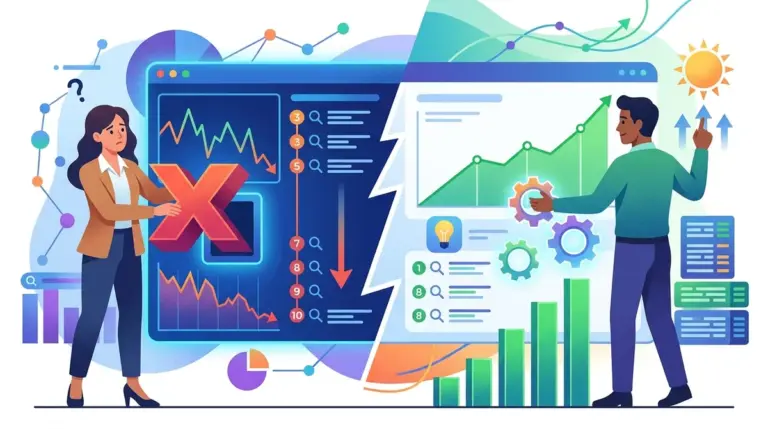
Learning SEO is often described as a "low floor, high ceiling" discipline. The fundamental concepts—keywords, links, and content quality—are intuitive enough for a beginner to grasp in a weekend. However, the execution of these concepts within a competitive landscape requires a synthesis of data analysis, technical troubleshooting, and psychological insight. For a business owner or a marketing professional, the difficulty lies not in understanding what SEO is, but in managing the variables that influence a site’s visibility over time.
The learning curve is non-linear. You will likely see rapid progress in the first few months as you fix obvious technical errors and optimize meta tags. The difficulty spikes when you move from "fixing" a site to "growing" its authority against established competitors who have years of data and backlink history. To determine if SEO is hard for you, it is necessary to break the discipline down into its core components. Understanding the timeline for mastering these skills can help set realistic expectations about how long it takes.
The Cognitive Divide Between Theory and Execution
SEO theory is straightforward: search engines want to provide the most relevant, authoritative, and technically sound answer to a user's query. If you provide that answer, you win. The execution is where the complexity resides because "relevance" and "authority" are moving targets defined by Google’s evolving algorithms.
Best for: Logical thinkers who enjoy reverse-engineering systems and tracking incremental data changes.
Practical SEO requires you to balance three distinct pillars, each with its own difficulty level:
- Technical SEO: Ensuring search engines can crawl and index your site. This involves server response codes, site architecture, and schema markup.
- On-Page SEO: Optimizing the actual content and HTML source code. This involves keyword research, intent mapping, and internal linking.
- Off-Page SEO: Building the site’s reputation through backlinks and social signals. This is often considered the hardest part because it relies on external validation and networking.
The Technical Barrier: How Much Code is Required?
A common misconception is that you must be a software engineer to learn SEO. While coding skills are an advantage, they are not a prerequisite for most SEO roles. You do, however, need to understand how the web works at a structural level. You must be comfortable looking at HTML to identify where a canonical tag is misplaced or why a JavaScript framework is preventing a page from being indexed. This structural understanding is key to learning SEO without coding, as it allows you to diagnose issues effectively.
The difficulty here is often found in the nuance of "Core Web Vitals." Measuring Largest Contentful Paint (LCP) or Cumulative Layout Shift (CLS) requires a level of technical literacy that goes beyond basic blogging. If you can navigate a Content Management System (CMS) like WordPress or Shopify and understand the difference between a 301 redirect and a 404 error, you have already cleared the initial technical hurdle.
Warning: Avoid the "set it and forget it" mindset. Technical SEO is a maintenance task, not a one-time setup. A single plugin update or a developer’s change to the robots.txt file can de-index an entire site overnight.
Content Strategy and the Psychology of Search Intent
Modern SEO has shifted away from keyword density toward "search intent." This is the psychological component of SEO. You have to determine why a user is searching for a specific term. Are they looking to buy, to learn, or to find a specific website? Matching your content to this intent is a sophisticated skill that requires empathy and market research.
The difficulty here is staying objective. Many site owners write what they want to say, rather than what the user is looking for. Learning to use tools to analyze the Search Engine Results Pages (SERPs) for patterns—such as whether Google prefers long-form guides or short video snippets for a specific query—is the hallmark of an advanced SEO practitioner.
Link Building: The Persistence Factor
If technical SEO is logic and content SEO is psychology, then link building is sales. This is widely cited as the most difficult aspect of SEO because it involves human rejection. You are asking other website owners to vouch for your content by linking to it. This requires outreach, relationship building, and the creation of "linkable assets" like original research, infographics, or unique tools.
The difficulty isn't intellectual; it’s operational. It takes a high volume of outreach to secure a handful of quality links. Beginners often struggle here because they look for shortcuts, such as buying cheap links on Fiverr, which can lead to manual penalties and a total loss of search visibility.
Managing the Moving Target of Algorithm Updates
Perhaps the most frustrating part of learning SEO is that the rules change. Google rolls out core updates several times a year. A strategy that worked in 2022 might be obsolete or even harmful in 2024. This requires a commitment to "continuous learning."
To succeed, you must develop a filter for SEO news. There is a high volume of "noise" in the industry—anecdotal evidence and panic-driven theories. Learning to rely on first-party data (like Google Search Console) rather than third-party speculation is a critical step in reducing the perceived difficulty of the field.
Accelerating Your SEO Proficiency
To move from a beginner to a functional SEO practitioner, focus on a "learn by doing" approach. Theoretical knowledge without a live site to test on is largely useless in this industry. Start by launching a small niche site or optimizing a specific section of an existing business site. Document your changes and monitor the impact on your rankings over a six-month period.
Prioritize mastering Google Search Console first. It is the most accurate source of information regarding how Google views your site. Once you can interpret "Impressions" versus "Clicks" and identify which pages are losing rank, the "hardness" of SEO begins to dissipate, replaced by a clear, data-driven workflow.
Common Questions About Learning SEO
Do I need a degree to work in SEO?
No. There is no formal university degree for SEO. Most professionals are self-taught or come from backgrounds in marketing, journalism, or computer science. Employers and clients value a proven track record of ranking sites over formal certifications.
How long does it take to see results from SEO?
SEO is a long-term investment. Generally, it takes 4 to 12 months to see significant results from a new strategy. This timeline depends on the competitiveness of your industry, the age of your domain, and the quality of your content.
Is SEO still relevant with the rise of AI?
Yes, but the nature of it is changing. AI-generated answers in search results mean that SEOs must focus more on providing unique perspectives, first-hand experience, and high-authority data that AI cannot easily replicate. Search engines still need to source their information from indexed websites.
Can I learn SEO for free?
Absolutely. The most valuable resources, such as Google’s own Search Essentials (formerly Webmaster Guidelines) and various industry blogs, are free. The primary cost of learning SEO is the time required to test theories and stay updated on algorithm changes.