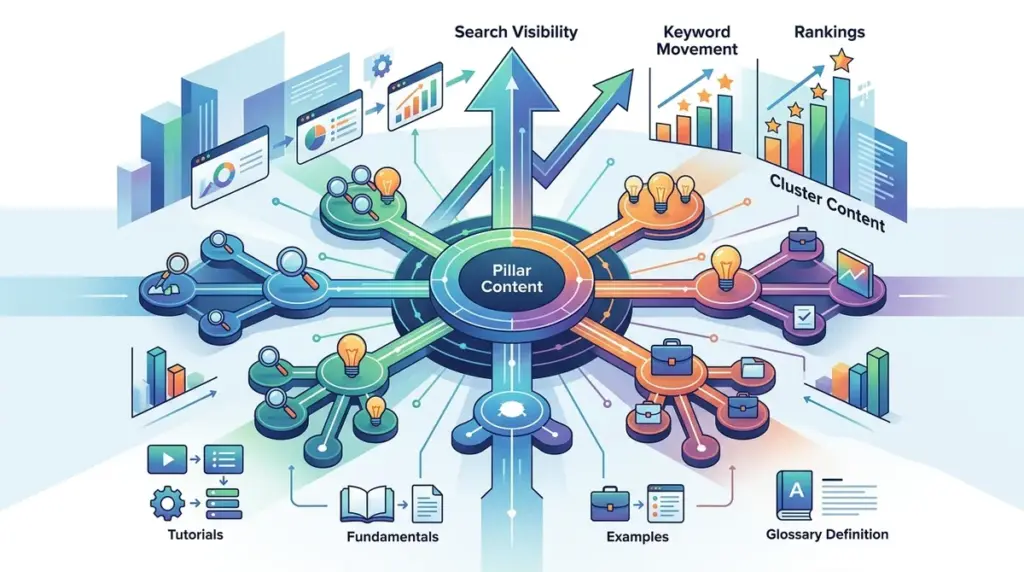
Modern search engines no longer rank pages based solely on the density of a single keyword. Instead, algorithms prioritize semantic relevance and topical authority. For SEO professionals and site owners, this shift means moving away from isolated blog posts and toward a structured architecture known as topic clusters. By organizing content into a hub-and-spoke model, you signal to search engines that your site is a definitive resource on a specific subject, rather than a collection of disconnected articles.
The primary goal of a topic cluster is to own the entire search landscape for a broad theme. This strategy addresses the problem of keyword cannibalization, where multiple pages on your site compete for the same search intent, and improves the user experience by providing a logical path for deeper learning. When executed correctly, topic clusters consolidate link equity and increase the ranking potential for both high-volume "head" terms and specific long-tail queries.
The Structural Components of a Topic Cluster
A functional topic cluster consists of three distinct elements: a pillar page, multiple cluster (or spoke) pages, and a strategic internal linking structure. Each element serves a specific purpose in the funnel and the site’s technical hierarchy.
The Pillar Page
The pillar page is the foundation of the cluster. It provides a high-level overview of a broad topic but avoids going into exhaustive detail on any single subtopic. For example, if your broad topic is "Remote Work," the pillar page covers the history, benefits, tools, and challenges of remote work in a single, long-form guide. It targets high-volume, competitive keywords and acts as the central traffic hub for the entire cluster.
Cluster Content
Cluster pages are the "spokes" that dive deep into specific subtopics mentioned on the pillar page. These pages target long-tail keywords and specific user intents. Following the "Remote Work" example, cluster pages might include "Best Ergonomic Chairs for Home Offices," "How to Manage Remote Teams," or "Security Protocols for Remote Employees." These pages provide the granular detail that the pillar page lacks, satisfying users who have specific, narrow questions.
Strategic Internal Linking
Internal links are the connective tissue of the cluster. Every cluster page must link back to the pillar page, and the pillar page should link out to every cluster page. This creates a closed loop of relevance. When one page in the cluster performs well or earns external backlinks, the link equity is distributed throughout the entire group via these internal links, lifting the organic visibility of all related pages.
How Clusters Signal Authority to Search Engines
Search engines use natural language processing (NLP) to understand the relationship between different terms. When you group content into clusters, you are essentially building a map of related entities for the crawler. This demonstrates "topical depth." If a site has twenty high-quality articles about different aspects of "Sustainable Gardening," search engines are more likely to view that site as an authority compared to a site that only has one generic post on the subject.
Clusters also improve crawl efficiency. By creating a clear, interlinked path between related topics, you make it easier for search engine bots to discover new content and understand the hierarchy of your site. This reduces the risk of "orphan pages"—content that has no internal links and is therefore difficult for search engines to index or value.
Pro Tip: Avoid the "one-way link" mistake. Many marketers link from the pillar to the spokes but forget to link the spokes back to the pillar. For the cluster to function as a single unit of authority, the link from the specific subtopic back to the main hub is the most critical signal of hierarchy.
Steps to Implementing a Topic Cluster Strategy
Building a cluster requires a shift from "what should we write today?" to "what gaps exist in our topical coverage?" Use the following process to organize your content production:
- Identify your core pillars: Select 3 to 5 broad topics that are central to your business or expertise. These should be broad enough to support at least 10 to 15 subtopics.
- Conduct a content audit: Map your existing articles to these pillars. You will likely find that you already have "spoke" content that just needs to be better linked and updated.
- Perform gap analysis: Identify the subtopics your competitors are covering that you are missing. Look for "how-to" queries, "what is" definitions, and "best of" lists related to your pillar.
- Standardize anchor text: Use consistent, descriptive anchor text when linking from cluster pages back to the pillar. This reinforces the primary keyword of the pillar page.
- Update the pillar page: As you add new cluster pages, ensure the pillar page is updated with a brief summary of that new subtopic and a link to the full article.
The Impact on User Engagement and Conversion
Beyond the technical SEO benefits, topic clusters significantly improve on-site metrics. When a user lands on a specific cluster page—such as "How to set up a home office"—they are likely interested in the broader subject of remote work. By providing a clear link to the pillar page or other related spokes, you keep the user on your site longer.
This increased "dwell time" and lower bounce rate are secondary signals to search engines that your content is helpful. More importantly, it moves the user through the marketing funnel. A user might enter via a "top-of-funnel" informational cluster page and, through internal links, find their way to a "bottom-of-funnel" product page or a lead-gen pillar guide. Topic clusters turn a single visit into a multi-page session, increasing the likelihood of conversion.
Measuring the Success of Your Clusters
Traditional SEO reporting often looks at individual page performance. To measure a topic cluster, you must aggregate data. Monitor the total organic traffic for all pages within the cluster. Look for a "halo effect" where an increase in backlinks to the pillar page leads to improved rankings for the long-tail cluster pages. If the cluster is working, you will see the entire group of pages moving up in search results together, rather than isolated fluctuations.
Executing Your First Cluster Build
Start by choosing one high-value topic where you already have some content. Clean up the internal linking first to see if you can trigger a ranking boost without writing new copy. Once the structure is set, begin filling the gaps with new cluster pages. This iterative approach allows you to see the impact of the architecture before committing to a massive content production schedule. Focus on creating the most comprehensive resource available for your chosen topic, ensuring that no user needs to return to the search results to find a better answer.
Common Questions About Topic Clusters
How many cluster pages do I need for one pillar?
There is no fixed number, but a healthy cluster typically requires at least 8 to 20 subtopics to demonstrate significant authority. The goal is to cover the topic so thoroughly that you answer every logical follow-up question a reader might have.
Can one cluster page belong to two different pillars?
Yes, but use caution. While a page on "Digital Security" could technically fit under a "Remote Work" pillar and a "Cybersecurity" pillar, it is better to choose a primary parent to avoid confusing search engines about the site’s hierarchy. Use a secondary link for the other pillar rather than making it a core part of the cluster structure.
Is a pillar page just a long blog post?
Not necessarily. While many pillar pages are long-form articles, they can also be resource centers, category pages, or interactive tools. The defining characteristic is not the length, but the role it plays as a central hub that links to more specific, granular content.