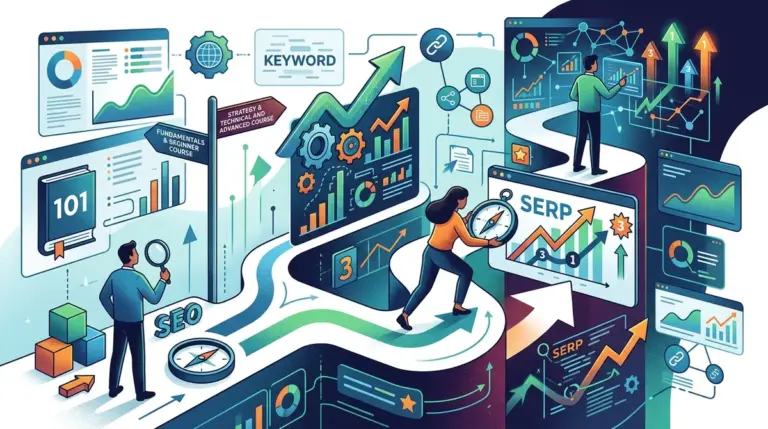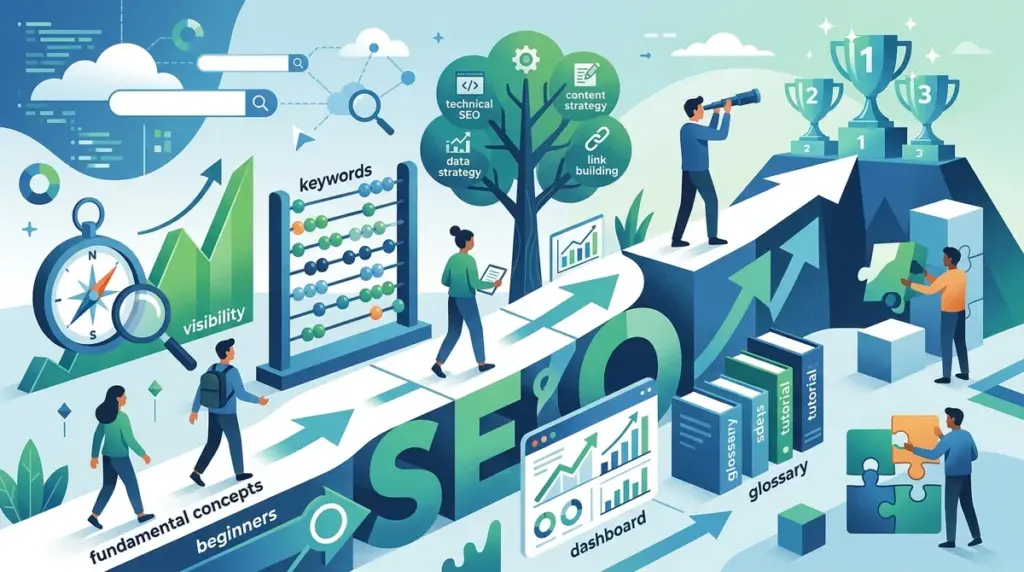
The transition from curious observer to functional SEO professional requires more than just reading blog posts; it requires a structured curriculum that connects technical theory with bottom-line results. For beginners, the primary challenge is not a lack of information, but a lack of a roadmap. The industry changes quarterly, yet the fundamentals of crawlability, relevance, and authority remain the bedrock of organic growth. For those wondering about the ROI, it's worth considering whether investing in formal training is worthwhile for a career in this field.
Selecting an SEO course involves balancing three specific variables: technical depth, tool-agnosticism, and practical application. A course that teaches you only how to use a specific software is a tutorial, not an education. Conversely, a course that stays entirely in the realm of theory without showing you how to edit a meta description or audit a redirect chain leaves you unprepared for the actual work. This guide evaluates the top educational programs based on their ability to turn a novice into a practitioner capable of executing a basic search strategy.
Evaluating SEO Curriculum Quality
Before committing hours to a certification, verify that the curriculum addresses the current state of search. Following the recent shifts toward "Helpful Content" and E-E-A-T (Experience, Expertise, Authoritativeness, and Trustworthiness), any course still teaching keyword stuffing or exact-match domain strategies is obsolete. Look for modules that prioritize user intent over raw search volume and those that explain the relationship between site architecture and the Google crawl budget.
Freshness: Check the last update date. If the course was filmed before 2023, it likely misses critical nuances regarding AI-generated content and the evolution of the Search Engine Results Page (SERP) features like Featured Snippets and People Also Ask boxes.
Practicality: A high-quality course should provide checklists, templates, or a sandbox environment. You should leave the course knowing exactly which buttons to click in Google Search Console to submit a sitemap.
Instructor Pedigree: Distinguish between professional educators and active practitioners. Active practitioners who manage agency clients or in-house portfolios usually offer more "in-the-trenches" advice that accounts for common technical hurdles.
1. Moz Academy
Moz has long been the gold standard for introductory SEO education. Their SEO Fundamentals course is part of a larger "SEO Essentials" certification that breaks down the complexity of search into six distinct pillars. It begins with the mechanics of how search engines function—crawling, indexing, and ranking—before moving into keyword research and on-page optimization. The delivery is polished, utilizing a mix of video instruction and quizzes to reinforce the material.
Best for: Marketing generalists who need a structured, professional introduction to the vocabulary and core concepts of SEO without getting bogged down in advanced code.
Pros: The course provides a very clear "Searcher Intent" framework that helps beginners understand why people search, not just what they search for. It also includes a highly useful module on link equity and how internal linking structures distribute "ranking power" across a site.
Cons: The curriculum is heavily biased toward Moz’s proprietary metrics like Domain Authority (DA) and Page Authority (PA), which are helpful but not official Google ranking factors.
Verdict: This is the safest bet for corporate teams or new hires who need a high-quality, reputable certification that covers all the basics in a weekend of study.
2. Ahrefs Academy
Ahrefs offers a "SEO Course for Beginners" that is remarkably high-production and entirely free. Led by Sam Oh, the course bypasses the fluff and focuses on the mechanics of competitive intelligence. It covers keyword research, on-page SEO, and the basics of link building. While it uses the Ahrefs toolset for demonstrations, the underlying logic is applicable to any SEO workflow. The course is structured into short, digestible videos that favor "showing" over "telling."
Best for: Practical learners who want to see the actual workflow of finding low-competition keywords and analyzing competitor backlinks.
Pros: Excellent visualization of complex topics like the "Link Intersect" and how to identify content gaps. It is arguably the most visually engaging course on this list, making it easier to retain information.
Cons: Because it is a free lead-generation tool for their software, some strategies are difficult to execute if you do not have a paid Ahrefs subscription.
Verdict: If you plan on using professional SEO tools, this is the best starting point to ensure you aren't just staring at data but actually interpreting it.
3. Semrush Academy
The "SEO Fundamentals Course with Greg Gifford" is a standout offering from Semrush. Gifford is a seasoned agency veteran, and his teaching style is fast-paced and high-energy. The course covers the technical basics but shines when discussing local SEO and the nuances of the SERP. It includes 31 lessons over four hours, making it one of the most comprehensive free options available. The certification exam at the end is rigorous enough to hold actual weight in a job interview.
Best for: Beginners who want an agency-side perspective and those interested in how SEO works for local businesses. This course is ideal for beginners who want an agency-side perspective and those interested in specific training for local businesses.
Pros: Gifford’s focus on the "why" behind the "what" provides a deeper strategic understanding than most basic courses. The modules on mobile SEO and international SEO are surprisingly detailed for an introductory level.
Cons: The interface can feel a bit cluttered as Semrush pushes its own toolset quite aggressively throughout the video modules.
Verdict: This is the best free course for someone who wants to understand the professional "daily grind" of an SEO specialist.
4. HubSpot Academy
HubSpot’s SEO Certification Course approaches search through the lens of Inbound Marketing. It is less about the technical "pipes" of a website and more about the content strategy required to attract and convert users. It covers topics like topic clusters, pillar pages, and how to build a sustainable content engine. This course is ideal for content creators and copywriters who want to ensure their work is discoverable.
Where it fits: Inside a broader marketing education; it’s best for those who view SEO as one piece of a larger lead-generation puzzle.
Pros: The focus on "Topic Clusters" is a modern approach to SEO that moves away from the outdated "one keyword per page" mentality. It teaches you how to organize a site for both users and bots.
Cons: It is light on technical SEO. You won't learn much about server-side optimizations, schema markup, or advanced site migrations here.
Verdict: Choose this if your primary job is content creation and you need to understand how to make your articles rank without becoming a technical specialist.
5. Google Search Central
While not a traditional "course" with a certificate, Google’s own documentation and their "SEO Starter Guide" are the primary sources of truth for the industry. Their YouTube series, hosted by Googlers like John Mueller and Martin Splitt, provides direct insights into how Googlebot sees the web. They cover everything from the importance of HTTPS to how to use the robots.txt file to manage crawling. It is technical, dry, and incredibly accurate.
Best for: Technical-minded beginners who want to hear the rules directly from the source to avoid "SEO myths."
Pros: It is the only resource that is 100% accurate regarding Google’s specific requirements. It provides the most reliable information on Core Web Vitals and Page Experience signals.
Cons: There is no hand-holding. It is a collection of documents and videos rather than a guided path, which can be overwhelming for a total novice.
Verdict: This should be mandatory reading alongside any other course on this list to verify that the "hacks" you learn elsewhere aren't actually violations of Google's guidelines.
6. Yoast SEO Academy
For the millions of beginners starting their journey on WordPress, Yoast SEO Academy is the most logical starting point. Their free "SEO for Beginners" course explains how search engines work and how the Yoast plugin helps you communicate with them. It focuses heavily on content SEO—readability, keyword distribution, and metadata. They also offer a "Structured Data" course which is one of the best introductions to SEO Learning Center for non-coders.
Best for: WordPress users and small business owners managing their own blogs or service sites.
Pros: The instructions are immediately actionable within the WordPress dashboard. The course does an excellent job of explaining "Readability" as a ranking factor.
Cons: It is very specific to the WordPress ecosystem. If you use Shopify, Wix, or a custom-built site, much of the practical advice won't apply.
Verdict: If your site runs on WordPress, take this course first. It will save you hours of configuration errors.
7. Coursera (Google SEO Fundamentals by UC Davis)
This course is part of the "Search Engine Optimization Specialization" offered by the University of California, Davis. It provides an academic structure that many self-paced courses lack. It covers the history of search, how to conduct a competitive audit, and the nuances of local vs. international SEO. Because it is hosted on Coursera, it includes peer-reviewed assignments and a more formal grading system.
Best for: Students or professionals who prefer a traditional classroom structure and want a university-branded certificate for their resume.
Pros: The peer-graded assignments force you to actually perform SEO audits and keyword research, which is better for retention than just watching videos.
Cons: The academic pace can feel slow for those who want to "learn and do" immediately. Some of the video content feels a bit dated compared to the rapid-fire updates of Ahrefs or Semrush.
Verdict: This is the best option for those who need the discipline of a syllabus and the credibility of a university name to satisfy employer requirements.
8. Udemy (The Ultimate SEO Training 2024 by Joshua George)
Joshua George runs a successful SEO agency, and his Udemy course is built on what actually works for his clients. This is a massive, 18-hour deep dive that covers everything from keyword research to technical audits and link building. Unlike the "high-level" overview courses, this one gets into the weeds of how to use specific tools like Screaming Frog and how to set up Google Analytics 4 (GA4) for SEO tracking.
Best for: Individuals who want a "one-stop shop" that covers both the basics and intermediate-level execution in one go.
Pros: It includes real-world case studies where you see the instructor take a site from zero to the first page. This "over-the-shoulder" style is invaluable for visual learners.
Cons: Because it is so long, it can be daunting. It also requires a small financial investment (though Udemy frequently has sales).
Verdict: This is the best "bang for your buck" for a beginner who is serious about making SEO a primary skill set or career path.
9. ClickMinded SEO Training
ClickMinded is designed for speed and ROI. Created by Tommy Griffith, who previously managed SEO at Airbnb and PayPal, the course is focused on "the 20% of SEO that drives 80% of the results." It is highly strategic, focusing on how to build a repeatable SEO process that can be scaled across different projects. It skips the history of the internet and goes straight to the frameworks used by high-growth startups.
Where it fits: For entrepreneurs and digital marketers who need to see results quickly and don't care about the granular "theory" of search.
Pros: The "SOP" (Standard Operating Procedure) approach is excellent. You get actual documents you can use to manage freelancers or team members.
Cons: It is one of the more expensive options on this list, which might be a barrier for casual beginners.
Verdict: If you are a business owner looking to implement a system rather than just "learn a subject," this is the most efficient choice.
10. Blue Array Academy
Blue Array is the UK’s largest pure-play SEO agency, and their "Technical SEO Certification" is one of the few beginner-friendly courses that doesn't shy away from the hard stuff. It teaches you how to look at a website like a search engine does. You’ll learn about HTTP status codes, canonicalization, sitemaps, and how to identify crawl errors. It’s a "technical first" approach that ensures your site's foundation is solid before you spend a dime on content.
Best for: Aspiring technical SEOs or web developers who want to understand the intersection of code and search rankings.
Pros: The focus on "technical health" is often missing from other beginner courses. It provides a very clear checklist for site audits that is used by their professional agency staff.
Cons: It can be intimidating if you have zero knowledge of how websites are built (HTML/CSS), though they do their best to simplify it.
Verdict: This is the best course for ensuring you don't build a beautiful website that is invisible to Google because of a simple technical oversight.
11. Learning SEO by Aleyda Solis
Aleyda Solis is one of the most respected SEO consultants in the world. Her "Learning SEO" project is a free, comprehensive roadmap that aggregates the best resources from across the web into a structured path. While not a single video course, it functions as a definitive syllabus. It guides you from "What is SEO?" through to "Advanced Technical Audits" and "SEO for JavaScript."
Best for: Self-starters who want a curated, expert-led roadmap without paying for a bundled course.
Pros: It is always updated. Because it links to various sources (articles, videos, tools), it provides a diverse range of perspectives rather than just one instructor’s opinion.
Cons: It requires significant self-discipline. There is no certificate at the end unless you complete the individual third-party courses she recommends.
Verdict: This is the most comprehensive "map" of the SEO landscape ever created. Every beginner should bookmark this immediately.
12. Backlinko (SEO That Works)
Brian Dean’s "SEO That Works" is legendary for its focus on the "Skyscraper Technique" and high-end link building. While the full course is only open for enrollment occasionally and is expensive, his free beginner modules and YouTube channel are masterclasses in on-page SEO and link acquisition. He focuses on the psychology of the searcher and how to create "power pages" that naturally attract backlinks.
Best for: Beginners who want to focus on the "Authority" side of the SEO equation (link building and PR).
Pros: The tactical advice on how to structure a blog post for maximum engagement and "shareability" is the best in the industry.
Cons: His methods are very labor-intensive. They require high-quality content production and manual outreach, which can be difficult for a solo beginner.
Verdict: Use Brian’s resources to learn the art of content promotion and link building once you have the technical basics down from another course.
How to Measure Your Progress
Completing a course and earning a badge is only the first step. To truly validate your learning, you must apply the concepts to a live environment. Start by setting up a basic WordPress site or a niche blog. Use the following metrics to determine if your education is translating into skill:
- Indexing Speed: Can you get a new page indexed by Google within 24 hours using the tools you’ve learned?
- Impression Growth: Within 30 to 60 days, are you seeing an upward trend in Google Search Console impressions for your target keywords?
- Technical Health: Run a crawl of your site. Are you able to identify and fix 404 errors, duplicate meta descriptions, and missing alt text?
- Keyword Mapping: Can you take a list of 50 keywords and correctly group them into 5-10 logical pages based on searcher intent?
If you can perform these tasks, you have moved beyond the "beginner" phase and are ready to tackle more advanced topics like programmatic SEO, data analysis with Python, or large-scale site migrations.
Frequently Asked Questions
Do I need a certificate to get an SEO job?
Not necessarily. While a certificate from Moz or Semrush looks good on a resume, most hiring managers care more about your "proof of work." A small portfolio showing a site you’ve successfully ranked is worth more than ten certificates.
How long does it take to learn the basics of SEO?
You can understand the core theory in about 10 to 20 hours of focused study. However, developing the intuition to know which "lever" to pull to improve a ranking usually takes 3 to 6 months of hands-on practice.
Is free SEO training enough?
Yes. The free courses from Ahrefs, Semrush, and Google are more than enough to get you to an entry-level professional standard. Paid courses are generally for those who want a more structured "SOP" approach or a specific university credential.
Should I learn coding to do SEO?
You don't need to be a software engineer, but you should understand basic HTML and how CSS/JavaScript can impact page speed and rendering. Knowing how to read a page's source code is a fundamental skill for any technical SEO.
How often do I need to update my SEO knowledge?
SEO is not a "learn it once" skill. Google updates its core algorithms several times a year. You should spend at least 2-3 hours a week reading industry news and case studies to stay current with the latest SERP changes and technical requirements.