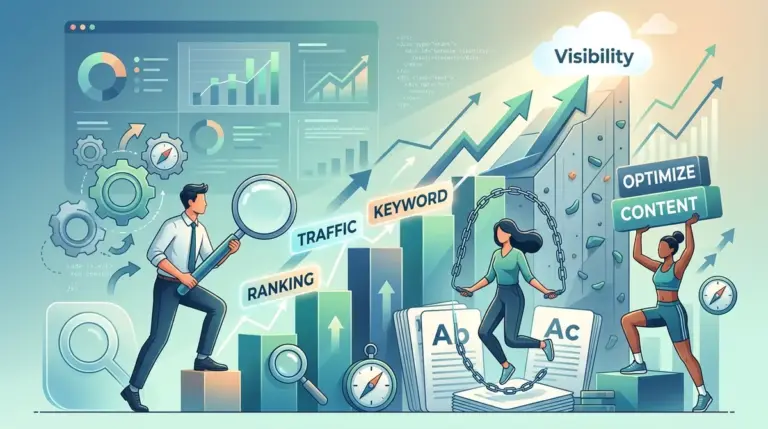
Most SEO practitioners measure their progress by a single line moving upward in a dashboard. While traffic and rankings are the ultimate goals, they are often lagging indicators influenced by algorithm updates, seasonality, or competitor errors rather than your own skill. True growth in SEO is defined by your ability to diagnose problems faster, predict outcomes with higher accuracy, and execute strategies that require less trial and error. If you cannot explain why a page moved from position eight to position two, you aren't getting better; you're just getting lucky.
Quantifying the Speed of Technical Diagnosis
A junior SEO sees a drop in traffic and spends three days digging through Google Search Console without a clear hypothesis. A maturing SEO identifies the pattern in thirty minutes. You are improving when your "time-to-diagnosis" shrinks. This happens because you stop looking at data points in isolation and start recognizing the signatures of specific issues.
Key indicators of technical mastery include:
- Developing custom extraction rules in crawlers to audit specific schema deployments or internal link structures instantly.
- Identifying the difference between a crawl budget issue and an indexing bottleneck without needing to consult a checklist.
- The ability to read raw server logs to see how bots interact with your site before the data is processed by third-party tools.
- Spotting "cannibalization clusters" where multiple URLs compete for the same intent, and resolving them through strategic merging rather than just deleting pages.
Improving Your Content "Hit Rate"
In the beginning, SEO is often a volume game—publish as much as possible and hope something sticks. You know you are getting better when your "hit rate" increases. This is the ratio of pages published to pages that reach the first page of search results within a specific timeframe (usually 60 to 90 days).
High-level SEOs don't just write for keywords; they write for the specific "Search Task Accomplishment." If you can look at a SERP and identify that the user is looking for a comparison table rather than a long-form guide, and you build your content to satisfy that specific layout requirement, your efficiency skyrockets. You stop wasting resources on 3,000-word articles when a 500-word tool or calculator is what the user actually wants.
Warning: Beware of "optimization theater." Spending hours tweaking meta descriptions for a 5% increase in CTR is a waste of time if the page's core technical foundation prevents it from ranking in the top 20. Prioritize efforts that move the needle, not just the ones that make the report look busy.
The Shift from Keyword Volume to Intent Mapping
A common sign of a novice is an obsession with high-volume keywords. As you improve, your focus shifts toward the commercial value of the traffic and the nuance of the intent. You are getting better when you can look at a keyword like "CRM software" and realize that a single page cannot rank for it because the intent is fractured between "best CRM," "CRM for small business," and "what is a CRM."
Mastery involves building topical authority through clusters. Instead of trying to win one big term, you build a web of supporting content that proves to the search engine that you understand the entire ecosystem of the topic. If your strategy now involves mapping out "hub and spoke" models before a single word is written, your architectural skills have evolved.
Recognizing Indirect Ranking Factors
Better SEOs understand that Google doesn't just look at the page; it looks at the brand. You are improving when you start suggesting changes that aren't strictly "SEO" but impact search performance. This includes improving site speed for better user retention, refining the UX to lower bounce rates, or working with the PR team to earn mentions from authoritative industry publications. When your recommendations start sounding like business growth strategies rather than just "adding more keywords," you have reached a senior level of thinking.
The Implementation Rate Metric
The best SEO strategy in the world is worthless if the developers never deploy it. A significant part of getting better at SEO is improving your implementation rate. This is a soft skill that has a hard impact on data. You are improving if you can:
1. Translate technical requirements: You stop sending 50-page PDF audits and start creating concise Jira tickets that speak the developer's language.
2. Forecast ROI: You can tell a stakeholder, "If we fix this internal linking structure, we expect a 15% lift in organic revenue within one quarter," and have the data to back it up.
3. Navigate bureaucracy: You understand which battles to pick. Getting a critical robots.txt fix through is better than fighting for six months over a header tag change.
Establishing a Personal Performance Audit
To track your own growth, you must maintain a log of your hypotheses. For every major change you implement, record what you expect to happen, why you expect it, and what the actual result was. Over time, the gap between your expectations and the reality of the SERPs should narrow. This "calibration" is the clearest evidence of professional development. If you find that your predictions are correct 80% of the time, you have moved beyond the "best practices" stage and into the "expert intuition" stage, where you can navigate even the most volatile algorithm updates with confidence.
Common Questions Regarding SEO Career Growth
How do I know if my SEO knowledge is outdated?
If you are still prioritizing exact-match domains, keyword density percentages, or bulk directory link building, your tactics are significantly behind current standards. Modern SEO focuses on entities, user intent satisfaction, and brand authority. If you haven't audited your process for "Helpful Content" signals or E-E-A-T (Experience, Expertise, Authoritativeness, and Trustworthiness) in the last six months, it is time to refresh your fundamentals.
Should I specialize in technical, on-page, or off-page SEO?
While being a "T-shaped" marketer—having a broad understanding of all areas with deep expertise in one—is valuable, you should first master the basics of all three. You cannot be a great technical SEO if you don't understand how content satisfies intent, and you cannot be a great link builder if you don't understand which pages on your site actually deserve to be linked to from a technical perspective.
Is a certification a good sign that I am getting better?
Certifications prove you understand a specific tool's interface or a baseline set of definitions. They do not prove you can rank a site in a competitive niche. The only true certification in SEO is a portfolio of successful case studies where you can clearly demonstrate the cause-and-effect relationship between your actions and the resulting growth.