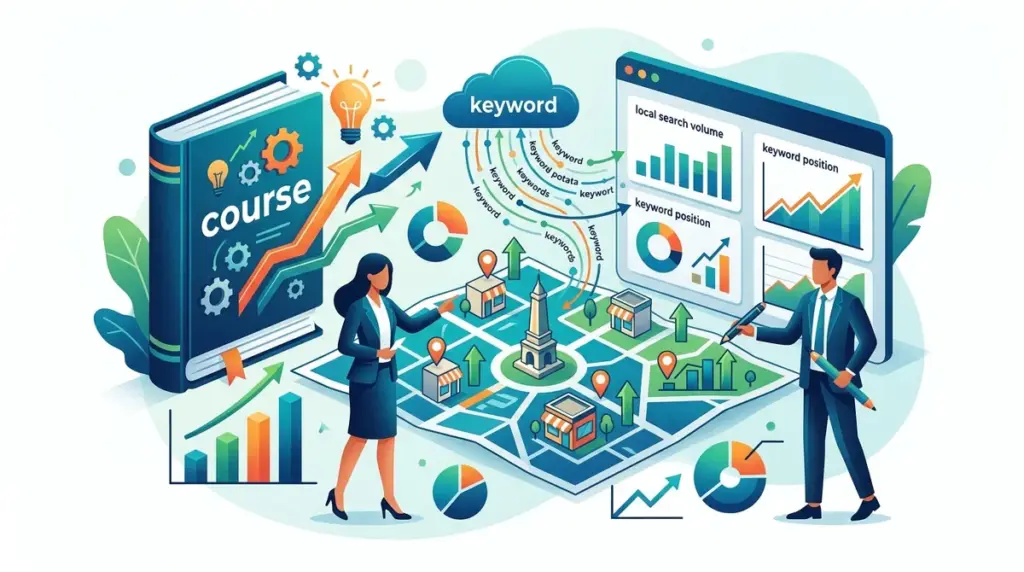
Local SEO is a distinct discipline that requires a different tactical playbook than traditional organic search. While standard SEO focuses on global or national visibility, local search is governed by proximity, relevance, and prominence within a specific geographic radius. For a business owner, the goal is appearing in the Google Map Pack; for an agency, the goal is repeatable scaling across hundreds of locations. Selecting a course requires identifying whether you need foundational knowledge of Google Business Profile (GBP) or advanced strategies for multi-location schema and citation auditing.
Critical Factors in Local SEO Training
Before committing to a curriculum, evaluate the syllabus against these four technical pillars. If a course ignores these, it is likely outdated or too high-level to be commercially useful.
Google Business Profile (GBP) Mastery: The course must go beyond "filling out the profile." It should cover category selection, the impact of business descriptions on ranking, and how to handle the "suggest an edit" feature from competitors.
Local Link Building: General backlink strategies do not work for local. Look for modules on "unstructured citations," local sponsorships, and community-based link opportunities that build geographic relevance rather than just Domain Authority.
Review Management Systems: Reviews are a confirmed ranking factor. A professional course should teach you how to build a system for review acquisition and, more importantly, how to respond to negative reviews to mitigate conversion loss.
Technical Local Signals: This includes LocalBusiness Schema markup, NAP (Name, Address, Phone) consistency across the web, and landing page optimization for specific city-state keywords.
1. BrightLocal Academy
BrightLocal Academy offers a modular approach to local search education, specifically designed for those who need to execute tasks immediately. Their curriculum is divided into specific "tracks" like "How to Land Your First Local SEO Client" and "Google Business Profile Masterclass." The content is heavily focused on the practicalities of the Map Pack, moving quickly through the "why" and spending most of the time on the "how." The lessons are updated frequently to reflect changes in the Google Business Profile interface, which is notorious for shifting its dashboard layout.
Best for: Junior agency staff and freelancers who need a step-by-step checklist for client onboarding and profile optimization.
Pros: The courses are free and provide a clear path from beginner to intermediate levels. The "Local Search Audit" module is particularly strong for teaching how to spot errors in existing listings.
Cons: Because the course is created by a software company, many of the workflows are built around using their specific toolset, which may be a limitation if you use a different stack.
Verdict: This is the best starting point for anyone who wants to understand the mechanics of local citations and GBP management without an upfront financial investment.
2. The Blueprint Training: Local SEO
The Blueprint Training, led by Ryan Stewart, is not just a course; it is a collection of agency Standard Operating Procedures (SOPs). This training is built for scale. It treats local SEO as a manufacturing process, focusing on how to delegate tasks to virtual assistants or junior team members. It covers high-level strategy but shines in its documentation, providing templates for reporting, intake forms, and project management boards. It moves away from the "magic" of SEO and focuses on the "math" of local rankings.
Best for: Agency owners and lead SEOs who need to systematize their local search offerings to improve profit margins.
Pros: Includes downloadable assets like Google Sheets templates for auditing and project tracking that can be immediately integrated into a business.
Cons: The price point is significantly higher than individual certifications, making it less accessible for solo business owners or hobbyists.
Verdict: Buy this if you are struggling with the "messiness" of managing multiple local clients and need a rigid, repeatable framework to ensure nothing falls through the cracks.
3. Moz Academy: Local SEO Certification
Moz has long been a foundational educator in the SEO space, and their Local SEO Certification follows a structured, academic approach. The course is broken down into six parts, covering everything from the fundamentals of local search to advanced reporting. It places a heavy emphasis on the "Local Ecosystem," explaining how data aggregators like Factual and Infogroup (Data Axle) distribute business information across the web. This is more theoretical than some "how-to" courses but provides a deeper understanding of why certain tactics work. This provides a solid foundation, especially for those looking to delve into advanced technical SEO principles.
Best for: Marketers who want a formal certification and a deep understanding of the underlying data structures of local search.
Pros: The explanation of the "Data Aggregator" network is the most thorough in the industry, helping students understand why NAP errors persist even after updating a GBP.
Cons: The video production can feel a bit dated compared to modern, fast-paced courses, and the tactical advice on GBP can lag behind the very latest algorithm shifts.
Verdict: Use this course to build a solid theoretical foundation that will help you troubleshoot complex ranking issues that simpler "checklist" courses can't solve.
4. Gotch SEO Academy
Nathan Gotch’s training is known for its focus on high-ROI activities. The local SEO portion of the academy focuses heavily on what Gotch calls "The SEO Trifecta": content, links, and technical health. Unlike courses that focus solely on the Map Pack, Gotch teaches how to dominate both the Map Pack and the organic results below it. This is a "premium" training program that emphasizes quality over quantity, teaching users how to build "powerhouse" local landing pages that convert traffic into leads.
Best for: Experienced SEOs looking to transition into the local space with a focus on high-ticket clients.
Pros: The focus on "Entity SEO" and how Google understands the relationship between a business and its location is highly advanced and effective.
Cons: Access usually requires a full academy membership, which is a significant investment compared to buying a standalone local course.
Verdict: This is the right choice if you want to move away from low-level citation building and toward a comprehensive "search dominance" strategy for your clients.
5. Sterling Sky: Local Search Clinic
Sterling Sky, led by Joy Hawkins, is arguably the most respected local SEO agency in the world. Their training isn't a single "course" in the traditional sense but an ongoing education through their "Local Search Forum" and specific "clinic" sessions. Their content is based on rigorous testing—they actually run experiments to see if specific tactics (like adding keywords to a business name) still work or if they lead to suspensions. This is "evidence-based" SEO at its finest.
Best for: Advanced practitioners who need to stay on the absolute cutting edge of what is working *right now* in the Google algorithm.
Pros: The data is based on real-world testing across hundreds of client accounts, making it the most reliable source of information for avoiding Google penalties.
Cons: The information is often dispersed across forums and webinars rather than a single, linear "101" course, which can be overwhelming for beginners.
Verdict: This is essential "continuing education" for anyone who makes their living through local SEO; the insights here often debunk common myths found in cheaper courses.
6. Semrush Academy: Local SEO with Greg Gifford
Greg Gifford is a well-known figure in the local SEO community, and his Semrush course is a high-energy, tactical deep dive. Gifford focuses heavily on "Local Search Signals," explaining how to optimize your website to prove to Google that you are a local authority. The course covers everything from local link building to the importance of "near me" search intent. It is relatively short but packed with actionable advice that can be implemented in a single afternoon.
Best for: Visual learners and those who want a fast-paced, entertaining overview of local SEO without the fluff.
Pros: Gifford’s teaching style is engaging and memorable, and the course includes specific advice on "Local Schema" that is often overlooked in other basic trainings.
Cons: It lacks the deep-dive technical documentation (like SOPs or templates) found in more expensive, agency-focused programs.
Verdict: An excellent "refresher" or introductory course that provides a high level of value for the time invested, especially for those already using the Semrush suite.
7. Yoast: Local SEO Training
Yoast is synonymous with WordPress SEO, and their local course is specifically tailored for users of the Yoast Local SEO plugin. The training focuses on the technical side of things: how to set up your KML file, how to ensure your address is marked up correctly with SEO Learning Center, and how to manage multiple locations within a WordPress environment. It is less about "marketing strategy" and more about "technical implementation."
Best for: WordPress developers and site owners who want to ensure their technical foundation is perfect.
Pros: It makes the complex world of Schema markup accessible to non-coders and ensures your site is communicating correctly with Google’s crawlers.
Cons: It is very narrow in scope; it won't teach you how to build links or manage a reputation, only how to optimize your own website.
Verdict: If you use WordPress and the Yoast plugin, this is a "must-watch" to ensure you are actually using the tool’s features correctly.
8. ClickMinded: Local SEO Course
ClickMinded provides a highly structured, "no-nonsense" training program. Their Local SEO course is designed to take someone from zero to "competent" as quickly as possible. They focus on a "framework" approach, teaching you how to think about local search so you can adapt when the algorithm changes. The course includes a "Local SEO Strategy Document" that acts as a blueprint for any new project.
Best for: In-house marketing managers who need to oversee local SEO efforts and need a reliable framework to judge performance.
Pros: The focus on "Search Intent" is superior to many other courses, helping you understand which keywords actually drive phone calls versus just "vanity" traffic.
Cons: The course is part of a larger bundle, which might be overkill if you only need local-specific information.
Verdict: A solid, professional choice for those who value clarity and structure over the "hacks" and "tricks" often found in lower-quality SEO training.
9. Local Client Takeover: GMB Process
Local Client Takeover (LCT) is known for its "in the trenches" approach. Their training is often more aggressive than the "white hat" Moz or Yoast courses, focusing heavily on how to manipulate the Map Pack for maximum visibility. They cover topics like "GMB Post" strategies and how to use geo-tagged images to boost local relevance. This is a very tactical, results-oriented program that appeals to those in the "lead generation" space.
Best for: Lead generation specialists and "pay-per-lead" SEOs who need fast results in competitive niches like plumbing or law.
Pros: They offer very specific "hacks" for improving Map Pack rankings that you won't find in more conservative, corporate-style courses.
Cons: Some of the tactics border on "grey hat," which may carry a higher risk of listing suspension if not executed perfectly.
Verdict: Choose this if you are in a hyper-competitive local market and need "aggressive" tactics to break into the top 3 of the Map Pack.
10. Hubspot Academy: Local SEO Basics
Hubspot’s entry into local SEO is, as expected, very beginner-friendly and focused on the broader marketing funnel. It connects local SEO to the "Inbound" methodology, explaining how local search fits into the customer journey. It covers the basics of GBP and citations but spends more time on how local SEO drives overall business growth and customer retention.
Best for: Small business owners who are doing their own marketing and need to understand where local SEO fits into their daily tasks.
Pros: It is completely free and very well-produced, making it easy to consume in short bursts.
Cons: It lacks the technical depth required for professional SEOs; you won't learn about advanced schema or complex citation auditing here.
Verdict: A great "introductory" video for a business owner, but professional SEOs will find it too basic for their needs.
11. SEO Learning Center (Aleyda Solis)
While not a "course" in the traditional sense, Aleyda Solis has curated a comprehensive "Learning Path" for Local SEO that aggregates the best free resources from across the web. It provides a structured roadmap, starting with "What is Local SEO?" and moving through to "Local Search Auditing." It’s a "living" syllabus that is constantly updated with the best articles, videos, and tools from industry leaders.
Best for: Self-starters on a budget who prefer to learn by reading and watching a variety of perspectives rather than a single instructor.
Pros: It is the most comprehensive "directory" of local SEO knowledge available, and it's entirely free.
Cons: Because it's a collection of external links, the quality and tone of the information can vary from one resource to the next.
Verdict: This is the ultimate "DIY" curriculum. If you have the discipline to follow the roadmap, you can get an Ivy League-level SEO education for free.
12. Udemy: Local SEO 2024 (Joshua George)
Joshua George’s course on Udemy is one of the highest-rated local SEO programs on the platform. It is a "watch-over-my-shoulder" style course where he takes a real business and optimizes it from start to finish. This includes setting up the website, optimizing the GBP, and building the first round of citations. It is highly practical and avoids the high-level theory that can bog down other courses.
Best for: Visual learners who want to see the actual "clicks" and "settings" required to optimize a local business.
Pros: Very affordable (especially during Udemy sales) and provides a complete "start-to-finish" case study that is easy to follow.
Cons: Like many Udemy courses, it can be a bit "thin" on the advanced technical side, such as API integrations or complex schema troubleshooting.
Verdict: The best "budget" option for a freelancer who wants to see exactly how a pro sets up a local campaign from scratch.
How to Measure the ROI of a Local SEO Course
Investing in a course is only useful if you can translate that knowledge into measurable business outcomes. When evaluating your progress after completing a course, do not just look at "rankings." Instead, focus on these three commercial metrics:
Map Pack "Actions": Use Google Business Profile Insights to track "Phone Calls," "Direction Requests," and "Website Visits." A successful course should teach you how to move these numbers, as these are the actions that directly lead to revenue for a local business.
Review Velocity and Sentiment: You should be able to implement a system that increases the frequency of new reviews. If your training doesn't result in a more active review profile, you are missing a core component of local prominence.
Local Organic Traffic: Beyond the Map Pack, you should see an increase in traffic to your "Service Area" or "City" landing pages. Measure this by filtering your search console data for pages that contain your target geographic keywords.
Frequently Asked Questions
How long does it take to learn Local SEO?
The fundamentals can be learned in 10 to 15 hours of focused study. However, mastering the nuances—such as handling listing suspensions, managing multi-location brands, and advanced schema—can take several months of hands-on practice.
Is Google Business Profile the only thing that matters in Local SEO?
No. While GBP is the most important factor for the Map Pack, your website's organic SEO still plays a massive role. Google uses your website's content and backlink profile to "verify" the authority of your GBP listing. If your website is poorly optimized, your GBP listing will struggle to rank for competitive terms.
Do I need to be a coder to do Local SEO?
No. Most local SEO tasks involve profile management, content creation, and basic website updates. While knowing how to implement JSON-LD Schema is helpful, most modern SEO plugins and tools handle the technical coding for you.
What is the difference between a "citation" and a "backlink"?
A citation is any mention of your business's Name, Address, and Phone number (NAP) online (e.g., a Yelp listing), even if there is no link to your site. A backlink is a clickable link from another website to yours. Both are important, but citations are specifically used by Google to verify your business's physical location.